Bringing international relations and geopolitics to the business world. Sponsored and presented by the Indo-German Centre for Business Excellence.
Alle Folgen
Climate Change and Maritime Security
This episode, presented by the German Maritime Centre, examines the profound interplay between climate change and maritime security within a shifting geopolitical landscape. The conversation uncovers how environmental pressures are increasingly influencing global trade, security policies, and industrial competitiveness, drawing on Dr. Kira Vinke’s extensive fieldwork and policy expertise. About the guest Dr. Kira Vinke Dr Kira Vinke is Deputy Research Director at the German Council on Foreign Relations (DGAP) and Head of the Centre for Climate and Foreign Policy. With nearly a decade’s experience at the Potsdam Institute for Climate Impact Research, she has also advised Germany’s International Development Agency and the Asian Development Bank. Her research includes fieldwork in South Asia, the Pacific, and the Sahel – regions especially vulnerable to climate stress. Dr Vinke serves on Germany’s Federal Academy for Security Policy advisory board and contributes to various humanitarian and climate-focused organisations. Her recent work bridges rigorous science and policy at the nexus of climate and security. Key Topics The Climate-Geopolitics Intersection The episode explores how climate change and geopolitics have become inseparable, with climate impacts eroding livelihoods and destabilising regions, particularly where governance is fragile. Dr Vinke explains how climate stress can widen societal divides, emphasising the importance of addressing these linked challenges. Climate Impacts on Global Maritime Infrastructure Attention turns to the maritime sphere, investigating how rising sea levels, extreme storms, and the melting Arctic sea ice affect trade routes, fisheries, and coastal communities. Dr Vinke notes that disruptions to essential chokepoints like the Panama and Suez Canals highlight the vulnerability of global supply chains. Will the IMO’s Climate Agenda Survive? The discussion critically addresses the IMO’s stalled emissions regulations, examining the geopolitical pushback led by the US and its implications for international cooperation. Dr Vinke warns that continued reliance on fossil fuels, especially amid American energy dominance, may jeopardise both economic stability and climate targets, while China’s surge in renewables shapes future competitiveness. Strategic Advice for Business Leaders Dr Vinke offers actionable advice to business leaders, urging them to consult regional climate projections and adopt scenario planning in order to bolster resilience amid ongoing uncertainty. She advocates staying committed to climate targets, warning that abandoning them provides only short-term relief at the cost of long-term competitiveness and societal risk. A Bold Prediction Looking ahead, Dr Vinke presents two scenarios for the next decade: one in which the world pivots towards climate neutrality, protecting vital systems despite inevitable losses, and an alternative future marked by irreversible environmental damage and societal upheaval. She maintains an optimistic outlook, believing that collective capacity and foresight can deliver positive outcomes if action is taken. Conclusion Ultimately, this episode demonstrates that business leaders cannot afford to ignore the entwined risks of climate change and geopolitics; the choices made now will define resilience, competitiveness, and global stability in years to come. Executive Briefing – what you should read now Memo Series: Global Reordering 2026 – A set of concise briefings from the DGAP addressing shifts across trade, strategic competition in science, and other sectors, capturing diverse expertise and timely insights.Disruption of Arctic Exceptionalism – A DGAP analysis of the pressures facing the Arctic, from geopolitical contestation to environmental change and resource exploration. Despite being published two years ago, its relevance endures as global stakes rise.
Subsea Cables as Critical Infrastructure
This episode, presented by the German Maritime Centre, explores the essential role of subsea cables as critical infrastructure underpinning global communications and business operations. Host Matthias Catón is joined by guests Camino Kavanagh and Jonas Franken, both experts in cyber security, international security, and maritime systems. What Are Subsea Cables? Subsea cables are fiber-optic systems laid across the seabed, connecting continents and islands for data transmission. They include not only the cables themselves but also landing stations, maintenance ships, repair logistics, and complex terrestrial links. The technology has advanced from telegraph cables to modern fiber optics, forming a backbone for the internet and communications. Scale and Complexity There are currently around 530 active international cable systems, with 70 more in the planning stages. Some cables connect just two points, while others are complex networks with up to 30 landing stations. Globally, over 1,600 cable landing stations exist, varying in size and complexity. Visibility and Public Awareness While most people rarely notice subsea cables, outages in places like Tonga, Southeast Asia, Norway, Ireland, and the Shetland Islands have raised awareness. Many still mistakenly believe internet connectivity is reliant on satellites, while in reality, subsea cables handle the overwhelming majority of data traffic. Redundancy and Resilience European countries enjoy high redundancy, ensuring minimal disruption from cable faults. In contrast, remote nations often rely on a single cable, making them more vulnerable to outages. Subsea cables are engineered for resilience, with backup options usually available, though incidents can still affect connectivity. Satellite vs. Subsea Cables Satellites serve a supplementary role, but subsea cables provide vastly superior bandwidth and lower latency. Even with modern satellite networks like Starlink, they cannot match the data volume or speed required for global internet infrastructure. Ownership and Financing Models Ownership is diverse: Major content providers such as Google, Meta, Amazon, and Microsoft, either individually or through consortia. Traditional telecom companies in consortia. Direct state involvement, including military-operated cables. Development bank funding—sometimes as part of diplomatic efforts. The European Union and the US are introducing more regulations, affecting industry operations. Business Implications Businesses—especially large, data-reliant firms—should consider cable resilience as part of their risk management. Industry groups such as the International Cable Protection Committee and the European Subsea Cable Association foster collaboration and dialogue. Medium and smaller businesses may face challenges in influencing infrastructure policy, but are equally reliant on connectivity. Regulatory Trends Regulation is increasing, especially across the EU (NIS2 Directive, Critical Entities Resilience Act) and the US (Federal Communications Commission rules). The challenge for policymakers and industry is to balance demanding security requirements with the need for operational flexibility and rapid response. Geopolitical Competition and Strategic Concerns Subsea cable networks are increasingly central in international competition, including concerns about reliance on equipment from certain foreign suppliers, particularly China. Security requirements may slow cable operations just when agility is needed most. Looking Ahead: Bold Predictions Jonas Franken predicts Antarctica will be connected to the subsea cable network in the next decade, marking symbolic global connectivity. Camino Cavanagh foresees subsea cables becoming even more contested and central to state competition, with industry facing greater challenges ahead. Conclusion Subsea cables are a crucial, yet often invisible, part of global infrastructure. Businesses and governments must increasingly account for resilience, security, and redundancy, given their importance to society and the economy. The episode emphasizes the need for awareness, collaboration, and proactive planning as the geopolitical and regulatory landscape evolves. About the guests Jonas Franken Jonas Franken is doctoral candidate at Science and Technology for Peace and Security (PEASEC) in the Department of Computer Science at the Technical University of Darmstadt. His research interests are located within the nexus of policy, technology, and international law, focusing on the resilience of Critical Information Infrastructures on land and at sea, as well as emerging problems in Maritime Security and the digitalization of Critical Infrastructures. He studied “Politics & Law” (B.A.) at the University of Münster and holds a Master’s degree in “International Studies / Peace and Conflict Research” (M.A.) from Goethe University Frankfurt, and Technical University of Darmstadt. The former member of the German Navy was for a long time engaged in civilian sea rescue. Website: https://peasec.de/team/franken/LinkedIn: https://www.linkedin.com/in/jonas-franken-711a6b147/Bluesky: https://bsky.app/profile/jonasfranken.bsky.social Camino Kavanagh Camino Kavanagh is a visiting Senior Fellow with the Dept. of War Studies, King’s College London and a Fellow with the United Nations Institute for Disarmament Research (UNIDIR). Her research covers topics relevant to technology, international security, conflict and diplomacy. Her current work focuses on cybersecurity and on the security and resilience of subsea infrastructure. Amongst other, Camino served as advisor/rapporteur to the 2019-2021 and 2016-2017 UN negotiating processes on cyberspace/ICTs and international security (the UN Open Ended Working Group and the UN Group of Governmental Experts). For the past decade she has also worked extensively across United Nations peace and security entities, with regional organisations and national governments on issues pertaining to international peace and security, conflict and digital technologies. Prior to this, Camino spent over a decade working in conflict contexts around the world, including with UN peacekeeping operations and political missions. LinkedIn: https://www.linkedin.com/in/caminokavanagh/ Executive Briefing – what you should read now Nicole Starosielski, The Undersea Network (Sign, Storage, Transmission), 2015, Durham, NC and London, UK: Duke University Press. José Chesnoy, Jean-Christophe Antona (Eds.) Undersea Fiber Communication Systems 3rd Edition, 2025. Academic Press. C. Kavanagh, J. Franken, and W. He. “Achieving Depth: Subsea Telecommunications Cables as Critical Infrastructure”. Geneva, Switzerland: UNIDIR, 2025. Omand, David: How to Survive a Crisis: Lessons in Resilience and Avoiding Disaster, 2023. Viking. Upcoming public event: Roundtable on subsea cables as critical infrastructure. In person (New York) and online, 30 March 2026
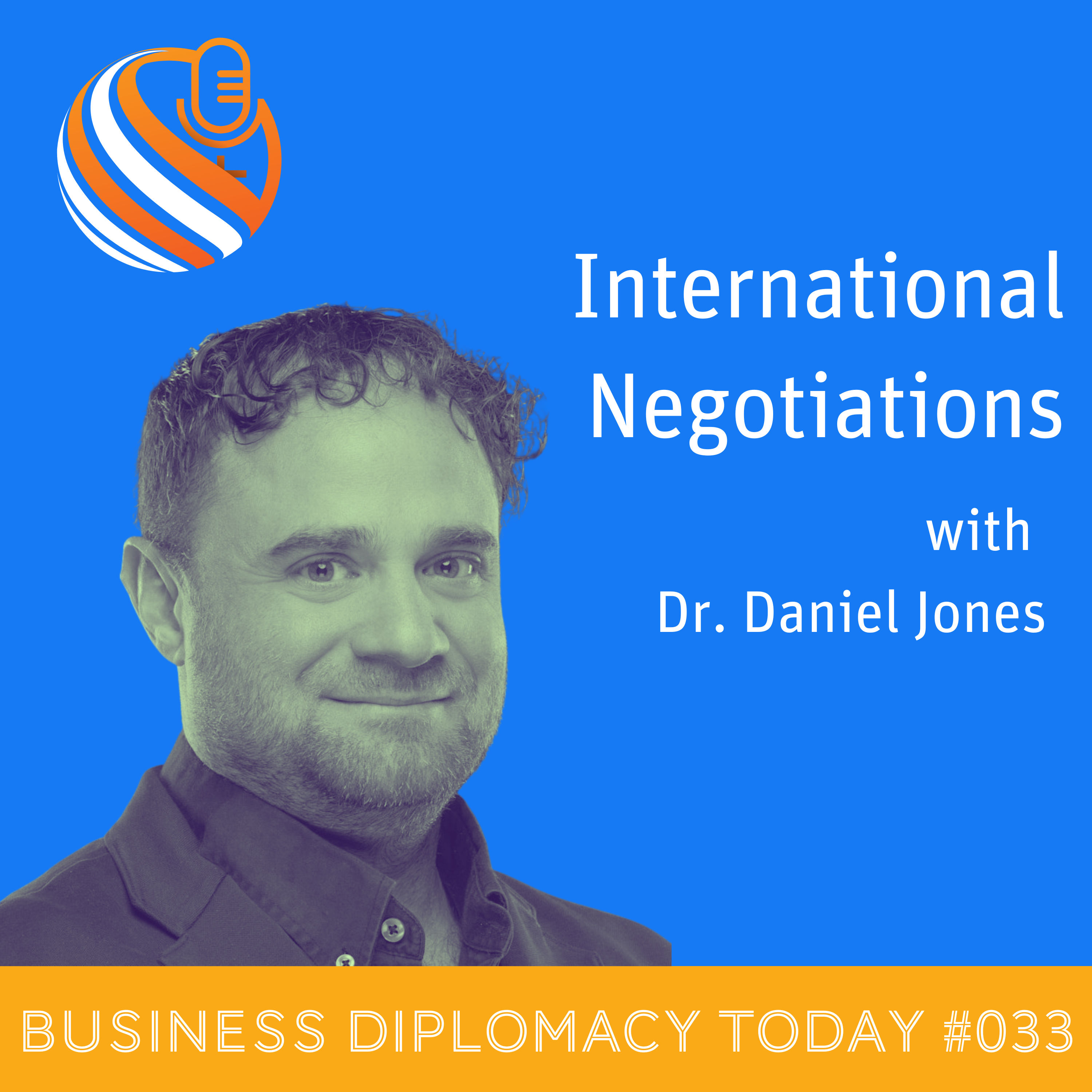
International Negotiations
In this episode of “Business Diplomacy Today, Daniel Jones, Professor of Management at the University of Nevada, Reno joins host Matthias Catón, to explore the complexities of negotiation in international and cross-cultural business contexts. The discussion begins by broadening the definition of negotiation, highlighting that it permeates every aspect of daily life and is not limited to transactional haggling. Jones explains that effective negotiation should be viewed as an information-gathering process aimed at maintaining long-term relationships rather than as an adversarial battle. The episode delves into the psychological underpinnings of negotiation, particularly the influence of the “dark triad”—Machiavellianism, psychopathy, and narcissism—on negotiation tactics and ethics. Jones notes that while most people act ethically in negotiations, a minority exploit deception and lack empathy, demanding greater vigilance and preparation when dealing with such individuals. The conversation moves to the international stage, using examples like Donald Trump’s negotiation style to illustrate the risks and short-term nature of aggressive, ego-driven tactics. Jones observes that while such styles might bring immediate gains, they often breed resistance and retaliatory behavior, ultimately undermining relationships and sowing nationalistic fervor. Cross-cultural negotiation presents additional challenges, from differing attitudes towards information sharing and trust-building to the impact of individualistic versus collectivistic mindsets. For instance, what may appear deceptive in one culture could be a normative communication style in another. Building rapport and understanding cultural context—such as the importance of informal relationship-building before business discussions in many countries—are vital to successful outcomes. Jones offers practical advice, recommending the use of open-ended questions to encourage dialogue and gather information, and emphasizes the importance of investigating a counterpart’s reputation, especially when “dark triad” personalities are suspected. Recognizing non-answers and red herrings is also crucial for uncovering potential deception. He also underscores the necessity for self-awareness regarding one’s own cultural and demographic background, as these factors influence both perception and effectiveness in negotiations. Trust, relationship-building, and cultural sensitivity are highlighted as increasingly critical skills. In his predictions for the future, Jones expects a gradual homogenization of business negotiation practices towards individualism, a shift in public sentiment away from ego-driven tactics, and a renewed emphasis on personal relationships and trust because of technological and social changes. Ultimately, this episode underscores why understanding negotiation—in all its psychological and cultural complexity—is indispensable in today’s interconnected and rapidly evolving global business environment. About the guest Daniel Jones is a Professor of Management at the University of Nevada, Reno, having received his PhD in personality and social psychology in 2011 from the University of British Columbia. With a background in psychology, Dr. Jones has conducted research on topics ranging from culture, health, law, and stereotypes. In particular, Dr. Jones is a leading researcher in personality psychology, focusing on destructive personalities such as Machiavellianism, psychopathy, and narcissism, often referred to as the Dark Triad. He also studies deception and the contextual factors that drive dishonesty. His research has implications for business ethics, workplace climate, and organizational deviance. Dr. Jones is also a speaker and consultant, applying evidence-based solutions for toxic work environments. Executive Briefing – what you should read now Di Stasi, M., Templeton, E., & Quoidbach, J. (2024). Zooming out on bargaining tables: Exploring which conversation dynamics predict negotiation outcomes. Journal of Applied Psychology, 109(7), 1077–1093. https://doi.org/10.1037/apl0001136 TEDx Talk by Alexandra Carter: “How to ask for more — and get it” (TEDxReno, 2024)https://www.youtube.com/watch?v=-3w5Iw6fYZY
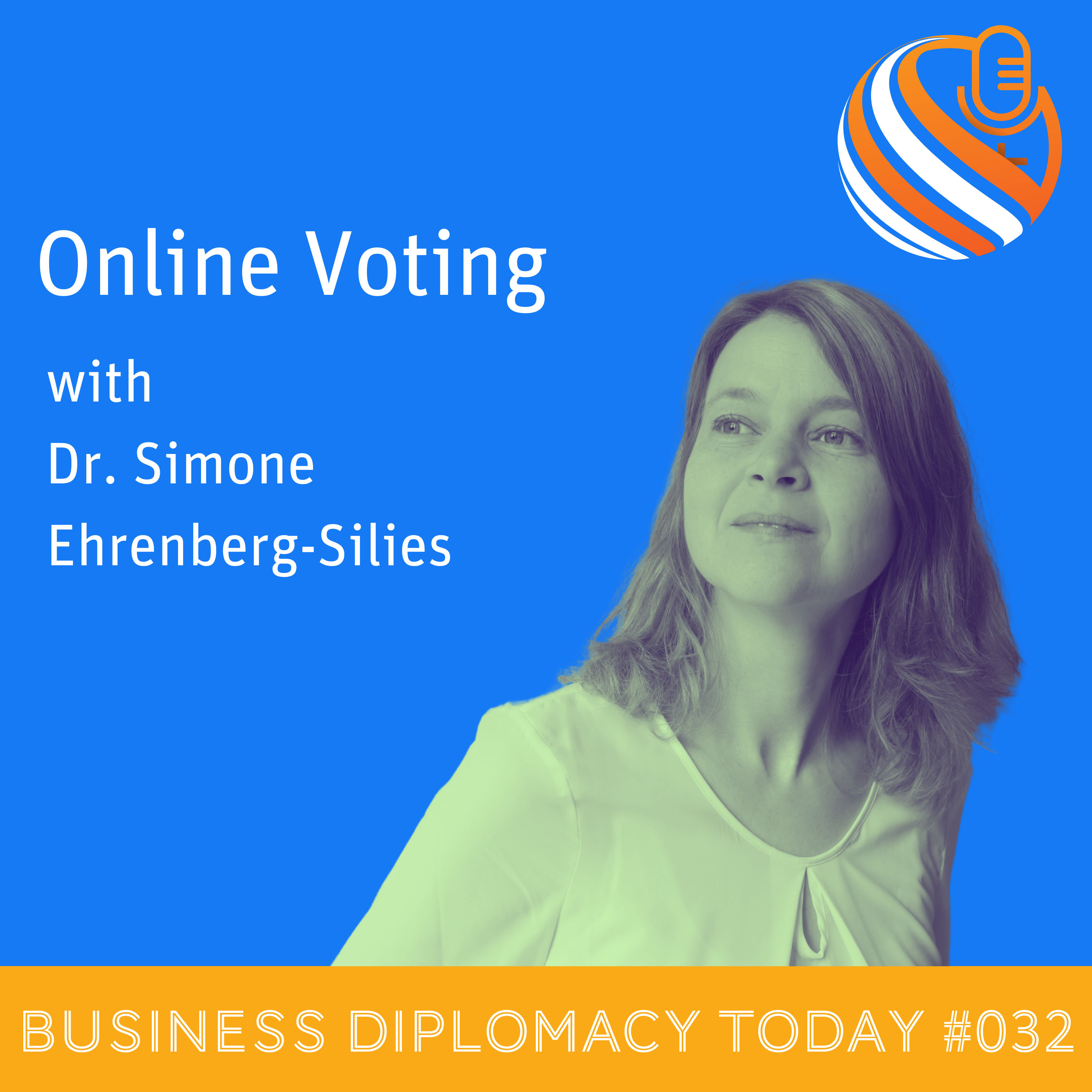
Online Voting
In this episode of Business Diplomacy Today, host Matthias Catón discusses the topic of online voting with Dr. Simone Ehrenberg-Silies, a senior consultant at the Institute for Technology and Innovation at VDI/VDE-IT. The conversation begins with a definition of online voting, differentiating it from traditional and electronic voting. The discussion delves into the reluctance of many countries to adopt online voting because of the risks of cyberattacks and manipulation, highlighting the vulnerability and potential loss of trust in the election process. Simone notes that online voting offers some advantages, such as better accessibility, error-free vote counting, and convenience, particularly during situations like the pandemic. The conversation shifts to other applications beyond political elections, such as university elections and party leader selections. Despite the benefits, Simone repeatedly emphasizes the substantial risks, especially without the possibility of a verifiable recount in case of disputes. The discussion covers the technical intricacies of online voting systems, focusing on security, authentication, and the potential future risks posed by quantum computing. About the guest Dr. Simone Ehrenberg-Silies Dr. Simone Ehrenberg-Silies is a Senior Consultant at the Institute for Technology and Innovation at VDI/VDE-IT. A political scientist, she has been working in foresight and technology assessment for over a decade, mainly for public clients such as the German Federal Ministry of Labour and Social Affairs, the Office of Technology Assessment at the German Bundestag and the Deutsche Bundesbank. Simone is passionate about working and publishing on topics such as the future of work, the future of payments, social, economic and political transformation, and geopolitical issues at the intersection of technology and innovation. Executive Briefing – what you should read now E-Voting – alternative Wahlformen und ihre Absicherung (2023) Nino Haratischvili (2019): The Eighth Life (for Brilka) Our Sponsor This episode is sponsored and presented by the Indo-German Centre for Business Excellence.
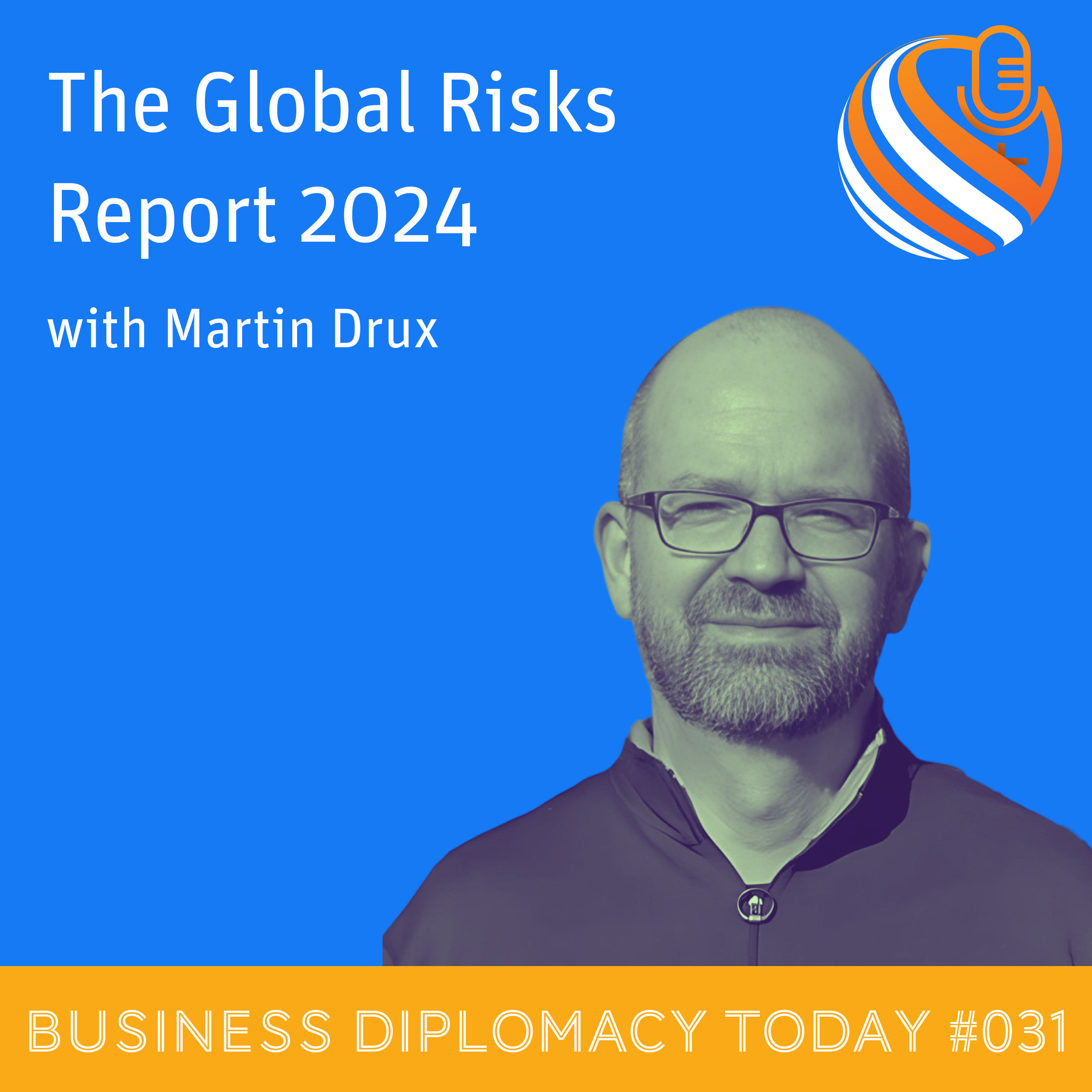
The Global Risks Report 2024
In this episode of Business Diplomacy Today, guest Martin Drux from Marsh McLennan delves into lessons learned from the COVID-19 pandemic and the importance of businesses preparing for future events like the permafrost virus. Host Matthias Catón discusses technology’s role in risk assessment, citing Google’s use of search data to track flu outbreaks. Drux highlights how AI and technology can enhance risk prediction and data quality, especially in the insurance sector. The episode addresses geopolitical risks such as power shifts, tensions in the Middle East, and China’s assertiveness, with Drux advocating for peaceful solutions and innovation. Companies should take Drux’s advice and manage talent shortages, especially in Europe, while also incorporating ESG factors into their strategies. The Global Risk Report, a collaboration between the World Economic Forum, Marsh McLennan, and Zurich, serves as a valuable resource that highlights risks like misinformation, climate change, and social unrest. Drux points out the evolution of risk management, noting a shift to new risks like cyber threats and environmental challenges. The conversation covers whether non-insurance companies are effective at assessing risks and the importance of diversifying production and markets. Drux emphasises the importance of learning from past mistakes with countries like Russia and China while balancing ethical and political views. He predicts a tumultuous decade filled with both innovations and challenges, stressing human rights and the responsible use of AI. The discussion ends on a hopeful note, with Drux underlining humanity’s broader aim of survival. This episode is essential for understanding the ever-evolving landscape of global risks and the need for businesses to adapt proactively. The topic is vital today as companies navigate an increasingly complex and dynamic world. About the guest Martin Drux Martin Drux is the Multinational Client Service Leader for Europe at MarshMcLennan based in Düsseldorf, Germany. Martin has worked in the insurance industry for 30 years, always in client-facing roles for large multinational clients. Besides various client executive and managerial roles in Germany, Martin has worked a couple of years in the USA (Philadelphia), Asia and the UK (London). Martin joined Marsh in 2007 as a senior client executive for German Fortune 1000 companies and has led the Marsh Multinational Practice in Europe since 2013. Executive Briefing – what you should read now Global Risks Report 2024 Kiss, Bow, Or Shake Hands by Terri Morrison and Wayne A. Conaway Our Sponsor This episode is sponsored and presented by the Indo-German Centre for Business Excellence.
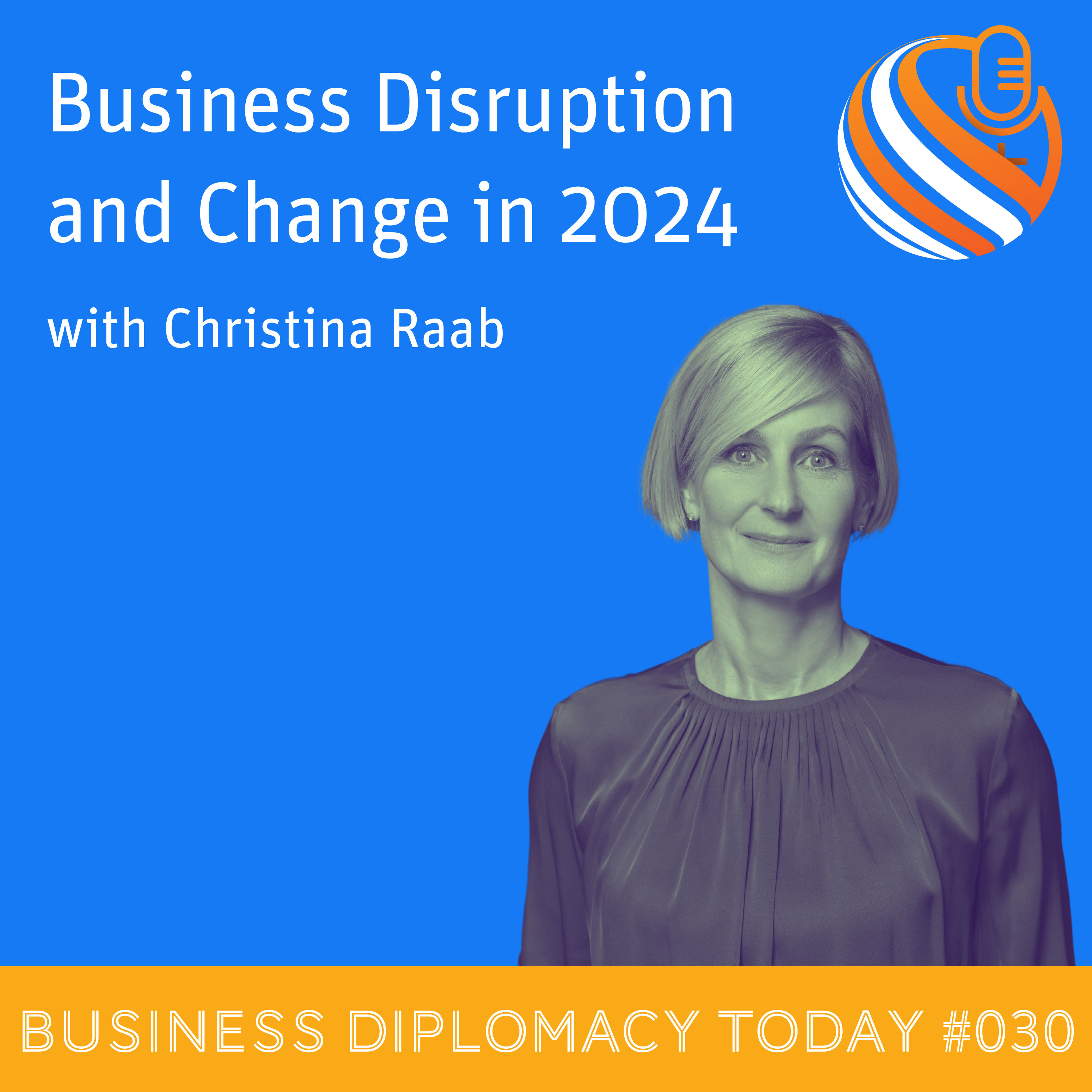
Business Disruption and Change in 2024
In this episode, host Matthias Catón join Christina Rabe, the Market Unit Lead for Accenture in Austria, Switzerland, and Germany. They delve into the Pulse of Change Index developed by Accenture. Raab discusses the interconnectedness of technology, talent shortages, and demographic shifts, emphasizing the movement of talent from countries like India and the critical role of global talent pools. The discussion explores how artificial intelligence (AI) is poised to reshape various industries, starting with banking, capital markets, insurance, and software. Raab underscores the importance of companies being proactive rather than reactive in adapting to these changes, through investments in technology and talent. The conversation also touches on the essential human aspect, advocating for diversity and maintaining human values at the core of future technological transformations. About the guest Christina Raab Christina Raab is the Market Unit Lead for Accenture in Austria, Switzerland and Germany (ASG) and part of Accenture’s Global Management Committee. In this role, Christina supports clients from various industries with complex business transformations. She has a strong focus on creating new value for businesses, employees, and customers through the combination of technology and human-led innovation. She is Vice President of the German IT industry association Bitkom, of the American Chamber of Commerce in Germany and is a member of the Board of Trustees of Econsense, the Forum for Sustainable Development of German Business. Christina is also a member of the Senate of the German Academy of Science and Engineering acatech, as well as a Board member of Generation CEO. Christina has a Master’s degree in Business Administration and Business Italian from the University of Passau. She is based in Munich. Executive Briefing – what you should read now Handelsblatt Morning Briefing Crashkurs – Wirtschaft trifft Geschichte Our Sponsor This episode is sponsored and presented by the Indo-German Centre for Business Excellence.
Asia After Europe
In Episode 29 Matthias Catón is joined by Sugata Bose, Gardiner Professor of Oceanic History and Affairs at Harvard University. Following Sugata’s recent publication “Asia After Europe: Imagining a Continent in the Long Twentieth Century”, Matthias and him discuss the how Asia’s history has been defined by Europe and what the current century brings. Matthias and Sugata’s discussion delve into history, identity and European focus in Asia; looking at ideas of Asian countries post-independence, prospects of a multipolar region and Asia’s need to detach themselves from a Eurocentric vision of universalism. With Sugata’s expertise in international history, the episode also looks at economic and business implications for the path of Asia, both as a continent and individual countries. Sugata provides his opinions on aggression and conflict in the region, utilising relations between India and China as a prime example. This episode is valuable for those interested in an analytical view to Asian history – how did colonialism shape Asia? Why did post-colonial states in Asia adopt European values? What do current geopolitical events in the region mean for its future? About the guest Sugata Bose Sugata Bose is the Gardiner Professor of Oceanic History and Affairs, Harvard University. He has served as Director of Graduate Studies in History at Harvard and as the Founding Director of Harvard’s South Asia Institute. Dr Bose obtained his PhD at the University of Cambridge. He is the author of several books, and his most recent publication, “Asia After Europe” was released in February 2024. Sugata served as a Member of Parliament in India elected to the 16th Lok Sabha (2014-2019) representing the Jadavpur constituency in Bengal and throughout that period as a member of the Parliamentary Standing Committee on External Affairs. Executive Briefing – what you should read now Bose, Sugata (2024) Asia After Europe: Imagining a Continent in the Long Twentieth Century Gungwu, Wang (2021) Renewal: The Chinese State and the New Global History Majapra, Kris (2014) Age of Entanglement: German and Indian Intellectuals Across Empire
Achieving Financial Equality
In Episode 28 of Business Diplomacy Today, host Matthias Catón is joined by Mary Ellen Iskenderian, President and CEO of Women’s World Banking. Matthias and Mary Ellen examine the persistent gender gap in financial inclusion and its linkages to digital inclusion. Matthias and Mary Ellen begin their conversation by analysing why finance is not optimised for women, looking at the lack of access to financial services for women and the intricate connection of financial equality and digital inclusion. Using India as a case study, Matthias and Mary Ellen illustrate the importance of implementing digital public infrastructure that is inclusive and motivates individuals to stay in the system. Looking at the topic from a business perspective, Matthias questions why banks and companies are not working harder to push for financial inclusion. Mary Ellen shares that there is a lack of utilising data to see what products and services are offered, demanded and can drive their businesses. Matthias and Mary Ellen further discuss why innovation in this sector seems to come from emerging economies and the polarising debate on the efficacy of cryptocurrencies in achieving financial inclusion. About the guest Mary Ellen Iskenderian Mary Ellen Iskenderian is President and CEO of Women’s World Banking, the global nonprofit devoted to giving more low-income women access to the financial tools and resources they need to achieve security and prosperity. Mary Ellen has led the Women’s World Banking global team, based in New York, since 2006 and also serves on the Investment Committees of its two impact investment funds. Executive Briefing – what you should read now Iskenderian, Mary Ellen (2023) – There’s Nothing Micro about a Billion Women: Making Finance Work for Women Women’s World Banking (2023) – Reaching Financial Equality for Women
The EU AI Act
In Episode 27 of Business Diplomacy Today, host Matthias Catón is joined by Till Klein, Head of Trustworthy AI at appliedAI. Matthias and Till explore the forthcoming EU AI Act, including an investigation of its core principles and implications for businesses. Their conversation begins by looking at key points of the EU AI Act, including the EU’s risk-based approach, where it tries to classify certain AI practices into four categories. Matthias and Till discuss if such an act will hinder bringing innovation to the European Union due to its requirements around data governance, risk management, and accuracy. As emerging technologies are constantly evolving, Matthias and Till further analyse how quickly the AI Act may become redundant and how to navigate this complexity, both from a governance and business perspective. Although AI regulation is not new, both in the EU and other regions, Matthias and Till provide an insightful episode for those interested in understanding how (and why) regulation is conceived and its evolving implications on businesses and societies. This episode was recorded on 29 January; it’s important to note, that since then, the Act has been modified and further developed. About the guest Till Klein Dr Till Klein is the Head of Trustworthy AI at appliedAI, a leading AI initiative in Europe, where he is working toward accelerating Trustworthy AI at scale. Together with this colleagues and the entire AI Ecosystem, Till is driving the co-creation of methods and tools for operationalising regulations, standards, and principles of Trustworthy AI, from Europe and beyond. Till gained several years of industry experience in Regulatory Affairs for Medical Devices, as Lead Auditor for ISO 9001, and as Head for Quality Management in a drone company, which equips him with practical and skills perspectives that are invaluable for applying Trustworthy AI. Till holds a Ph.D. in Business from the Centre for Transformative Innovation at the Swinburne University of Technology in Melbourne, Australia. Besides AI, his research interests include economic geography, economic complexity, social networks, innovation management, and regional clusters. Executive Briefing – what you should read now Visit appliedAI’s website to understand more about the regulation. The EU AI Act
Geopolitical Intelligence and Corporate Planning
In Episode 26, host Matthias Catón is joined by Lewis Sage-Passant, Global Head of Intelligence at Novo Nordisk and founder of EncyclopediaGeopolitica. Matthias and Lewis delve into the intricacies of how multinational corporations navigate geopolitics and international relations. Matthias and Lewis investigate how the changing responsibility of security intelligence teams and how, in a corporate environment, this is transforming into a strategic direction – how does geopolitics work? What implications does this have on a business? Empirically, Lewis explains how geopolitic events affect different sectors of a business, such as supply-chains, access and affordability to raw materials; and as globalisation evolves, more types of industries have had to internationalise, and therefore, pay more attention to geopolitical events. Interestingly, Lewis and Matthias also look into the idea of “opportunity intelligence” and how geopolitics should not only be viewed from a “risk” perspective, but also a business development angle. This episode is a must listen for business leaders and policy makers to understand how to incorporate geopolitical intelligence in their corporate strategy and utilise this as both a risk, and opportunity. About the guest Lewis Sage-Passant Dr Lewis Sage-Passant is the Global Head of Intelligence at Novo Nordisk, and is a researcher in the field of intelligence and espionage focusing on the private sector. Lewis holds a PhD from Loughborough University in intelligence studies, and is an adjunct professor in intelligence at Sciences Po Paris and EMLyon Business school. He has extensive experience working and living in the Middle East and Asia Pacific regions in a variety of geopolitical analysis and intelligence roles, working for some of the largest corporations in the energy industry, the financial sector, and technology sector. He is also the founder and editor of EncyclopediaGeopolitica.com, a website discussing geopolitical issues, where he hosts their podcast on dangerous topics in the security, intelligence, and geopolitics field, “How to get on a Watchlist”. Lewis has appeared in numerous media outlets, including the BBC, France24, CNBC, Harvard Business Review, The New Arab, El Mundo, GQ, and others, discussing intelligence, geopolitics, and security matters. Executive Briefing – what you should read now Political Risk: How Businesses and Organizations Can Anticipate Global Insecurity – Condoleezza Rice and Amy B. Zegart (2019) Bloc by Bloc: How to Build a Global Enterprise for the New Regional Order – Steven Weber (2019)
US-German Transatlantic Relations
In Episode 25 host Matthias Catón is joined by Simone Menne, President of the American Chamber of Commerce in Germany. In their discussion, Matthias and Simone address the intricacies of transatlantic relations between the US and Germany and how this relationship is shaped by geopolitics. Following themes of economics, politics and international relations, Matthias and Simone discuss the current stand of the transatlantic relationship and the significance of US-German partnerships; notably in the context of the automotive and pharmaceutical industries. As the US prepares for the 2024 election, the episode investigates the potential outcome and the rise of right-wing parties within Europe. Simone and Matthias further discuss the necessity to maintain political stability and the repercussions that may occur following electoral results. Further comparisons are made with the US’s dynamic business sector and the ageing population in Germany and, on a wider scale, Europe. Drawing on her experience of leading digital transformation, Simone explains the optimism behind leveraging new technologies and furthering sustainability efforts. This episode is a must-listen for business leaders and policymakers to gain insights to the US-German relationship and understand predicted outcomes in the short- and long-term. About the guest Simone Menne Simone Menne is an experienced manager with diverse experience, notably in finance and digitalisation. She was CFO at Lufthansa and Boehringer Ingelheim. Currently, she is a member of the Supervisory Board of Henkel and Deutsche Post AG and a Non-Executive Director of Russell Reynolds Associates and Johnson Controls International PLC. Simone is also President of the American Chamber of Commerce Germany e.V., where she is dedicated to maintaining transatlantic relations and strengthening economic ties between Europe and the USA. Executive Briefing – what you should read now Daniel Kehlmann (2023) Lichtspiel David J. Chalmers (2022) Reality+: Virtual Worlds and the Problems of Philosophy
The Digital Euro
In Episode 24 of Business Diplomacy Today, host Matthias Catón is joined by Karel Lannoo, CEO of the Centre for European Policy Studies (CEPS). In their discussion, Matthias and Karel dive into the complexities of implementing a digital currency and its impact on the financial landscape; in this episode, specifically on the case of the Eurozone and the Digital Euro. Covering an array of compelling topics, Matthias and Karel discuss the motivations of central banks to embrace digital currencies and the evolving landscape of digital payments. Karel shares thought-provoking arguments on the privacy concerns of implementing a digital Euro; as well as potential disruptions in the financial sector and the ramifications the digital Euro could have on monetary policy. One motivation of implementing a digital Euro is led by the desire to make the Euro a more significant global currency, Matthias and Karel, thus, look at the geopolitical landscape and financial significance of the Dollar and monetary policies in China and India. At the intersection of finance, technology and geopolitics, this episode is a must-listen for policymakers and business leaders to further understand and analyse the viability of implementing a digital Euro on national, regional and international levels. About the guest Karel Lannoo Karel Lannoo has been CEO of the Centre for European Policy Studies (CEPS) since 2000. He specialises in financial regulation, European economic governance and single market issues. His recent publications cover the EU healthcare sector policy, anti-money laundering, Russian financial sanctions, crypto-currency regulation and Europe’s geopolitical role. He has published several books on capital markets, MiFID, and the financial crisis, the most recent of which is “The Great Financial Plumbing, From Northern Rock to Banking Union” (2015). In October 2023 he co-authored the publication “A Digital Euro Beyond Impulse: Think Twice, Act, One”, a study highlighting the importance of value proposition and benefits to consumers and merchants in the EU with the adoption of the digital Euro. Karel holds a Baccalaureate in Philosophy (1984) and an MA in history (1985) from the University of Leuven, Belgium and obtained a Postgraduate Degree in European Studies (CEE) from the University of Nancy, France (1986). Executive Briefing – what you should read now Thomadakis, A., Lannoo, K., Shamsfakhr, F. (2023) A Digital Euro Beyond Impulse: Think Twice, Act Once. Centre for European Policy Studies European Parliament (2023) Digital Euro’s Legal Framework Eichengreen, B. (2023) ‘CBDCs still have not found their raison d’être’ Financial Times House of Lords (2023) Central bank digital currencies: Lords Economic Affairs Committee Report The White House (Sept 2022) Policy Objectives for a U.S. Central Bank Digital Currency System Swiss Central Bank (Mar 2021) How to Issue a Central Bank Digital Currency
2024 Trends to Watch
In Episode 23 of Business Diplomacy Today, host Matthias Catón is joined by Tom Standage, Deputy Editor of The Economist and editor of its future-gazing annual, The World Ahead. Timely, with the start of the new year, Matthias and Tom delve into global trends and predictions for 2024; as well as their implications for businesses and global affairs. To understand the metholodogy, Matthias and Tom begin by discussing how forecasting is developed and the necessity to analyse previous events and liaise with cross-departmental colleagues to look forward. Their conversation analyses both predictable events and forecasted events, ranging from GDP growth in a country to instability in domestic and international contexts. Interestingly, Matthias and Tom briefly look at how cognitive bias plays a role in the prediciability of events and how our common assumptions can lead us to be unprepared for events; contextualised in the episode, is the Russia-Ukraine war. The discussion further investigates crucial geopolitic affairs such as China-Taiwan, US Elections and the role of artifical intelligence. Tom further highlights the importance of 2024 as “election year” with over half of our global population living in a country that will have an election this year. With a wealth of knowledge and relevant contextualisation, this episode is a must listen for policymakers, business leaders and those interested in understanding how to navigate 2024 and the intricate network of global affairs. About the guest Tom Standage Tom Standage is Deputy Editor of The Economist and editor of its future-gazing annual, The World Ahead. He joined The Economist as science correspondent in 1998 and was subsequently appointed technology editor, business editor and digital editor. He is the author of seven history books, including “Writing on the Wall” (2013), “The Victorian Internet” (1998) and the New York Times bestsellers “A History of the World in 6 Glasses” (2005) and “An Edible History of Humanity” (2009). His latest book, “A Brief History of Motion”, was published in 2021. Tom studied engineering and computer science at Oxford University and has written for other publications including the New York Times, the Guardian and Wired, taking a particular interest in technology’s social and historical impact. Executive Briefing – what you should read now The Economist “The World Ahead 2024” Tetlock, P.E. and Gardner, D. (2016) Superforecasting: The Art and Science of Prediction
How Crises Shape Globalisation
In Episode 22 of Business Diplomacy Today, host Matthias Catón is joined by Prof. Harold James, Professor of History and International Affairs at Princeton University. Drawing inspiration from Harold’s recent publication Seven Crashes: The Economic Crises That Shaped Globalisation (2023), Matthias and Harold discuss seven major turning points in the history of globalisation. Their conversation explores the requirement for preparation and flexibility in responding to global crises, such as geopolitical tensions and the COVID-19 pandemic. Also discussed is the impact of political systems on crisis response and how this differs in autocratic and democratic systems. With globalisation being synonymous to interconnectedness, Harold and Matthias examine the influence of communication and technological advances during times of rapid change. Harold contextualises these theories through historical events and the importance of having a historical understanding to prepare for the interaction between a globalised world that experiences conflict and uncertainty. Discussing topics of historical events, innovation and global trade, this episode is a must listen for policymakers and business leaders to gain insights on how to be resilient and prepared for changes on a global level. About the guest Prof. Harold James Harold James, the Claude and Lore Kelly Professor in European Studies at Princeton University, is Professor of History and International Affairs. His books include a study of the interwar depress in Germany, The German Slump (1986); International Monetary Cooperation Since Bretton Woods (1996) and The End of Globalisation (2001). He was also co-author of a history of Deutsche Bank (1995), which won the Financial Times Global Business Book Award in 1996. His most recent publication is Seven Crashes (2023). He is the official historian of the International Monetary Fund. In 2004 he was awarded the Helmut Schmidt Prize for Economic History, and in 2005 the Ludwig Erhard Prize for writing about economics. He writes a monthly column for Project Syndicate. Executive Briefing – what you should read now James, H. (2023) Seven Crashes: The Economic Crises That Shaped Globalisation Döpfner, M. (2023) Trade Trap – How to Stop Doing Business with Dictators Farrell, H. and Newman, A. (2023) Underground Empire – How America Weaponized the World Economy
The Rise of Middle Powers
Episode 21 of Business Diplomacy Today covers the emerging significance of middle powers. Host Matthias Catón is joined by Michael Mazarr, Senior Political Scientist at the RAND Corporation. Matthias and Michael discuss how middle powers are rising and their impact on global trade and business environment. Beginning with definitions of middle powers, Michael explains the concept of different power scales, and the domestic and global roles great, middle, and small powers play. Understanding different factors as ingredients of influence, such as size, geography and economic power, Matthias and Michael discuss the shift into a multipolar reality where middle powers have a growing significance. Tied with these complexities, their conversation examines the implications of changes in the global power order on businesses and decision-making processes in contexts of investments and geopolitical shifts. Furthermore, the space that businesses provide for communication, such as cyber- and information security, is discussed. Matthias and Michael specify these theories in the cases of India’s growth, US-China relations, and developments within the Middle East; with Michael further advising business to continuously invest in developing their geostrategies and ability to operate internationally. Ultimately, this episode serves as a vital resource for understanding the changing dynamics of global business and diplomacy; as well as the imperative need for businesses to understand and adapt to global shifts to remain competitive and influential on an international scale. About the guest Dr. Michael Mazarr Michael Mazarr is a Senior Political Scientist at the RAND Corporation. Prior to coming to RAND, he served as Professor and Associate Dean at the U.S. National War College in Washington, D.C. He has served as Special Assistant to the Chairman of the Joint Chiefs of Staff, President and CEO of the Henry L. Stimson Center, Senior Vice President for strategic planning at the Electronic Industries Alliance, Legislative Assistant in the U.S. House of Representatives, and Senior Fellow and Editor of The Washington Quarterly at the Center for Strategic and International Studies. Executive Briefing – what you should read now Zakaria, Fareed (2011) The Post-American World: And the Rise of the Rest Bremer, Ian (2013) Every Nation for Itself: Winners and Losers in a G-Zero World
Social Inequality as a Business Risk
In Episode 20 of Business Diplomacy Today, host Matthias Catón is joined by Ashoka Mody, Charles and Marie Robertson Visiting Professor in International Economic Policy at the Princeton School of Public and International Affairs, Princeton University and author of “India is Broken: A People Betrayed, Independence to Today”. Matthias and Ashoka delve into how the world’s largest democracy faces obstacles in achieving fair and equal development, with a specific focus on how its history has shaped its present. With a detailed exploration into India’s history since 1947, Matthias and Ashoka look at theories of “path dependence” and how India’s previous leaders and historical events have shaped its politics and development today. From unaddressed economic challenges, to a lack of public goods and the breakdown of accountability, Ashoka provides an intriguing argument to the hindrances of India’s development. Matthias and Ashoka converse on three pressing themes: India’s economy, its growing inequality, and democracy and accountability. Ashoka debates the need to provide quality goods for the general population; and further suggests a potential solution of decentralising power – identifying Kerala as a role model. Bringing the topic to a global and business context, Matthias questions if India’s problems are not uncommon for emerging economies and the responsibility of businesses to address these challenges. As a growing destination for investment and India’s role on the global stage, this episode is a must listen for those interested in market access and entry to India. About the guest Prof. Ashoka Mody Ashoka Mody is Charles and Marie Robertson Visiting Professor in International Economic Policy at the Princeton School of Public and International Affairs at Princeton University. He is author of EuroTragedy: A Drama in Nine Acts. Previously, Professor Mody was Deputy Director in the International Monetary Fund’s Research and European Departments. He has worked at the World Bank, AT&T’s Bell Laboratories, and the Centre for Development Studies, Trivandrum. He has been a Visiting Professor at the University of Pennsylvania’s Wharton School and is a non-resident fellow at the Center for Financial Studies, Frankfurt. He received his Ph.D. in Economics from Boston University. Ashoka Mody has published a book, “India is Broken: A People Betrayed, Independence to Today” (Stanford University Press, 2023). He brings his Indian heart to this provocative new account of how India moved relentlessly from its hope-filled founding in 1947 to the dramatic economic and democratic breakdowns of today. Executive Briefing – what you should read now Mody, Ashoka (2023) India is Broken: A People Betrayed, Independence to Today Iyer, Kavitha (2021) Landscapes of Loss: The Story of an Indian Drought Independent Digital Media Outlets – The Wire (https://thewire.in/), Scroll (https://scroll.in/), Article 14 (https://article-14.com/)
Expert Influence in Policy- and Decision-Making
In Episode 19 of Business Diplomacy Today, host Matthias Catón is joined by Vera Axyonova, a Marie Skłodowska-Curie REWIRE Fellow at the University of Vienna and Principal Investigator of the project ‘Expert Knowledge in Times of Crisis – Uncovering Interaction Effects between Think Tanks, Media, and Politics’. Vera shares her expertise on the influence that experts and think-tanks can have on policy- and decision-making, specifically in hybrid and non-democratic regimes. Beginning with definitions of think-tanks and their influence on policy, Vera and Matthias delve into how these organizations and experts operate in different political environments. Vera specifically contextualizes these ideas with Russia and the reporting of events such as the COVID-19 pandemic and climate change through her research on the topic; and demonstrates that, in some cases, think-tanks actively transmit certain policy ideas provided by the state. Matthias and Vera further discuss the various factors which can influence information published by think-tanks; such as local regulations in the case of transnational think-tanks, the influence of donors and funders and the establishment of international expert networks to transfer policy solutions and options. With the fast spread of news and information and the importance of distinguishing between ‘misinformation’ and ‘disinformation’, this episode is a must listen for those interested in analyzing how we receive knowledge and the influence this knowledge holds. For business leaders and senior executives, Matthias and Vera recognize the role corporate think-tanks can inform market access and entry. About the guest Dr. Vera Axyonova Vera Axyonova is a Marie Skłodowska-Curie REWIRE Fellow at the University of Vienna and Principal Investigator of the project ‘Expert Knowledge in Times of Crisis – Uncovering Interaction Effects between Think Tanks, Media, and Politics’. In this project, she examines how knowledge about crises is produced and communicated by expert professionals in political settings beyond consolidated liberal democracies, how political and societal actors use this knowledge, and how much influence it has on policymaking. Before joining the University of Vienna, Vera had various roles in research, science management, and policy consulting. She was the Managing Director of “Academics in Solidarity” at Freie Universität Berlin and worked as a Postdoctoral Researcher and Assistant Professor at Justus Liebig University Giessen. Vera was also a Hurford Next Generation Fellow with the Carnegie Endowment’s Euro-Atlantic Security Initiative and is the founding co-chair of the ECPR Research Network on Statehood, Sovereignty, and Conflict. .stk-cbd988e .stk-button{background:#0e76a8 !important} Executive Briefing – what you should read now Abelson, D.E. (ed.) (2021) Handbook on Think Tanks in Public Policy https://www.e-elgar.com/shop/gbp/handbook-on-think-tanks-in-public-policy-9781789901832.html Pielke, R.A. (2007) The Honest Broker: Making Sense of Science in Policy and Politicshttps://doi.org/10.1017/CBO9780511818110
Entrepreneurship in Fragile States
Jan Kratzer, Chaired Professor for Entrepreneurship and Innovation Management and Founder/Academic Director of Centre for Entrepreneurship (CfE) at Technische Universität Berlin, joins Matthias Catón in this episode. Jan shares his expertise on challenges for entrepreneurs in low-income countries, comparing them to high-income countries. As their discussion explores the concept of entrepreneurship in fragile states, Matthias and Jan discuss theoretical definitions of fragile states and entrepreneurship. Jan explains how the latter has contrasting definitions globally; for example, micro-entrepreneurship is very common in African and Asian states, but the social-political-economic nexus in fragile states hinders the sustainability of an entrepreneurial business model. Despite the obstacles faced in fragile environments, such as low-tech industries, a lack of entrepreneurial support systems and legal regulations, Jan recognises the significance these young entrepreneurs have in growing economies through informal and smaller-scale entrepreneurship. Jan and Matthias further discuss the need for tailored educational programmes to train young entrepreneurs, the importance of reducing protectionist measures and how matured markets must give away their power to allow others to emerge and grow. As an increase in geopolitical risk calls for rethinking business strategies to maintain resilience, this episode is a must listen to gain a deeper insight into stimulating growth in fragile environments. About the guest Prof. Jan Kratzer Jan Kratzer is Chaired Professor for Entrepreneurship and Innovation Management and Founder/Academic Director of Centre for Entrepreneurship (CfE) at Technische Universität Berlin, Germany. At the Faculty for Business and Economy at Technische Universität Berlin he holds the function as Vice Dean for Internationalization and he is a member of the Academic Senate of Technische Universität Berlin. Prof. Dr. Jan Kratzer established and leads the (dual degree) master program MSc “Innovation Management, Entrepreneurship and Sustainability” (“IMES”). In 2003 Jan Kratzer and others created the startup “NetScan” (Applied Network Analytics) and in 2006 Jan Kratzer and others created the startup “Improof” (Project Management). As Chaired Professor for Entrepreneurship and Innovation Management/Academic Director CfE he has attracted around 20 million € third party funding from 2010 to 2023, He is in the editorial board of “Creativity and Innovation Management” (CIM), “Journal of Product Innovation Management” (J-PIM), “Sustainability” and “Highlights of Sustainability”. His research is mainly on factors that drive sustainable entrepreneurial and innovation activities towards success and resulted in ca. 100 scientific publications. At all Prof. Dr. Jan Kratzer has supervised more than 80 PhD’s as first supervisor. .stk-cbd988e .stk-button{background:#0e76a8 !important} Executive Briefing – what you should read now Lerner, D. A., Alkærsig, L., Fitza, M. A., Lomberg, C., & Johnson, S. K. (2021). Nothing Ventured, Nothing Gained: Parasite Infection is Associated with Entrepreneurial Initiation, Engagement, and Performance. Entrepreneurship Theory and Practice, 45(1), 118–144. https://doi.org/10.1177/1042258719890992
The EU Critical Raw Materials Act
In episode 17 of Business Diplomacy Today, Matthias Catón is joined by Ludivine Wouters, Managing Partner of Latitude Five, an investment and advisory firm operating in emerging markets. Ludivine shares her expertise in the metals and mining industry, specifically concerning the EU Critical Raw Materials Act (CRM Act). Matthias and Ludivine explore the EU’s approach to critical materials and the attempt to stimulate private sector action through strategic partnerships and market-driven initiatives. Their conversation contextualizes these theories globally, calling at the US approach of incentivizing electric vehicle and battery production, the Chinese transactional approach, Saudi Arabia’s sovereign fund, and Japan’s value chain investments. Ludivine and Matthias further navigate the complexities of the EU’s CRM Act in relation to the need to increase investment in critical materials, the importance of responsible sourcing, and the recognition that “minerals at any cost” is no longer an acceptable thought. As we become more and more conscious of our supply chains and responsible sourcing, this episode is a must-listen to gain valuable insights into the critical raw materials landscape and its impact on businesses. About the guest Ludivine Wouters Ludivine Wouters is managing partner of Latitude Five, an investment and advisory firm operating in emerging markets. Ludivine assists natural resources companies and investors in emerging markets as a strategy, governance, and policy adviser specializing in transaction management, regulatory affairs, government relations, and permitting. She also works on technical assistance programs for countries, focusing on mining and minerals policy, governance, and taxation. She also assists donor agencies in defining, assessing, and implementing critical minerals and responsible sourcing priorities, policies, and initiatives. Ludivine has experience in political risk insurance within Lloyd’s Insurance syndicate and significant legal experience in corporate law, mergers and acquisitions, and capital markets with leading international firms in Paris; she also worked for an emerging markets investment bank in London, focusing on metals and mining clients, particularly African juniors. Ludivine holds a Master in Business Law from Université Panthéon Assas (Paris II) and a JD in Law from Université Panthéon Sorbonne (Paris I) and is called to the bar in Paris. In 2013, she was nominated by her peers to be one of 100 Global Inspirational Women in Mining. Ludivine is a Visiting Fellow with the European Council on Foreign Relations (ECFR). .stk-cbd988e .stk-button{background:#0e76a8 !important} Executive Briefing – what you should read now State of Play is an independent research group focused on strategy and innovation in the global mining industry. Their biennial Mining Industry Survey has participants from around the globe and explores external drivers, strategic positioning, and organizational architecture. Press release on 16 March 2023 for the Critical Raw Materials Act European Parliament Legislative Observatory page for the Critical Raw Materials Act
Corporate strategy in the age of global uncertainty and volatility
In this episode, host Matthias Catón and Wilfried Aulbur, Senior Partner of Roland Berger, explore the navigation and development of business strategies in a volatile and ever-changing world. Through topics of geopolitical relations, climate change, and technological innovation, Matthias and Wilfried discuss the importance of agility to transform business strategy and respond to uncertainties. Drawing on his in-country experience, Wilfried provides a detailed account of India’s potential and growth and how the country’s responsiveness can be a model to follow globally. As we reexamine the geopolitical order, Wilfried and Matthias discuss the trends in internal business relations and the importance of staying innovative to drive resilient growth. About the guest Dr. Wilfried Aulbur Dr. Wilfried Aulbur is a Senior Partner of Roland Berger. He is responsible for the firm’s global Commercial Vehicle, Construction, and Agricultural business and leads the US Aerospace and Defense practice. Wilfried is based in Chicago and works across Automotive, Industrials, and Private Equity. Previously, he was the Managing Partner of Roland Berger in India, the head of Roland Berger’s Asia Automotive practice, and the Chairman of Roland Berger Middle East and Africa and served on the firm’s global supervisory board. Wilfried’s work includes growth strategies, M&A and due diligence, operational performance improvements, and technology strategies. Wilfried has served on numerous industry associations and panels, is a regular speaker at key industry events, and publishes extensively, including a recent book on doing business in India titled “Riding the Tiger”. Before his work with Roland Berger, Aulbur was the Managing Director and CEO of Mercedes-Benz India and was responsible for the passenger cars, trucks, and buses. He previously held various positions with Daimler in Europe, the US, and India. Wilfried holds a Ph.D. in Physics with a focus on Computational Material Science. .stk-cbd988e .stk-button{background:#0e76a8 !important} Executive Briefing – what you should read now Aulbur, Wilfried and Amit Kapoor (2016): Riding the Tiger: How to Execute Business Strategy in India McGrath, Rita (2019) Seeing Around Corners: How to Spot Inflection Points in Business Before They Happen Frankl, Viktor E. (2006) Man’s Search for Meaning
Water Governance and International Security
This episode of Business Diplomacy Today explores the topic of water security. Host Matthias Catón is joined by Susanne Schmeier, Head of the Water Governance Department and Associate Professor of Water Law and Diplomacy at IHE Delft. They discuss the global water crisis and its implications for meeting the 2030 Agenda, pollution issues, overuse, and potential conflicts. Susanne identifies the necessity to reduce our water footprint and highlights the relationship between businesses, foreign investors, and states in achieving this and holding each other accountable for water consumption. As our most valuable resource and global significance, Matthias and Susanne contextualize these arguments from Latin America to East Asia, exploring examples of collaboration and conflict within different regions. About the guest Prof. Susanne Schmeier Dr. Susanne Schmeier is an Associate Professor of Water Law and Diplomacy and the Head of the Water Governance Department at IHE Delft in the Netherlands. Her research focuses on conflict and cooperation over shared natural resources and the environment, particularly in water, and the legal and institutional mechanisms at local, national, and international levels to mitigate conflict and build long-term cooperation. She also applies this research to conflict resolution and mediation efforts in various regions worldwide. Before joining IHE Delft, she worked for the Gesellschaft für Internationale Zusammenarbeit (GIZ), the World Bank, the Mekong River Commission (MRC), and other international and regional organizations. .stk-cbd988e .stk-button{background:#0e76a8 !important} Executive Briefing – what you should read now Global Commission on the Economics of Water – Turning the Tide: A Call to Collective Action Water Peace and Security Partnership
Corporate Strategy and Political Risk
In this episode, Matthias Catón speaks with Famke Krumbmüller, Executive Director of the Geostrategic Business Group at EY, on building a robust corporate strategy in a volatile world. Famke introduces us to definitions and sub-categories of political and geopolitical risk and how companies can enhance their risk management protocols to be more prepared and expectant as the density and intenseness of global levels of volatility rise. With global examples, from France to China, Famke highlights the importance of businesses implementing and updating their geo-strategy; that is a holistic approach to managing political risk. Famke and Matthias apply this timely topic to various countries, including the rise of middle powers, and remind businesses of the importance of scenario planning to protect their models from anticipated events. About the guest Famke Krumbmüller As an Executive Director in the Geostrategic Business Group, Famke Krumbmüller provides EY’s clients and teams with actionable political insights to help them understand how politics impacts their business and think about strategies to anticipate and manage political risk. Before joining EY, Famke headed a Paris-based, innovative strategy consultancy in political risk, public affairs, and public policy, which she co-founded. Previously, she was based in London and was responsible for covering Western European countries at a renowned political risk firm. As a Forbes Europe “Policy & Law” list-maker and regular contributor to the media, she is an experienced and recognized commentator of European politics and a public speaker. Famke’s academic background is in European Affairs and Political Economy, which she studied at Maastricht University, the London School of Economics, and Sciences Po Paris. .stk-38b245e .stk-button{background:#00acee !important} .stk-cbd988e .stk-button{background:#0e76a8 !important} Executive Briefing – what you should read now EY 2022: Prepare now for the new era of globalization Caroline Criado Perez 2010: Invisible Women: Exposing Data Bias in a World Designed for Men
The migration governance complex
In this episode, Matthias Catón and Crystal Ennis discuss the migration governance complex, defined as how migration governance happens in practice and the various actors involved. Their discussion focuses on labor migration and examines its definitions, the fragmentation of migration governance, changing trends and geographical destinations of labor migration, and how we (individuals, organizations, and governments) can improve the socioeconomic conditions for labor migrants. Matthias and Crystal apply these theories globally and discuss practices in Germany, Canada, South Asia, and the Gulf countries. From a business perspective, and with businesses playing a significant role as employers, Crystal provides her expertise on what businesses can do to improve conditions for labor migrants and how a lack of regulatory incentives hinders this. About the guest Dr. Crystal A. Ennis Dr. Crystal A. Ennis is a scholar of global political economy and a university lecturer in Political Economy of the Middle East at Leiden University, The Netherlands. She is also the International Studies Review (ISR) ‘s Associate Editor and Vice President of the Association for Gulf and Arabian Peninsula Studies. Her research examines labor and migration governance, job seeking and economic belonging, and the political economy of dependency on hydrocarbon revenue and foreign labor in Gulf economies. Her publications have appeared in New Political Economy, Global Social Policy, Third World Quarterly, International Journal of Middle East Studies, and Cambridge Review of International Affairs. .stk-38b245e .stk-button{background:#00acee !important} .stk-cbd988e .stk-button{background:#0e76a8 !important} Executive Briefing – what you should read now The South Asian to Gulf Migration Complex by Crystal A. Ennis and Nicolas Blarel (2022) Networking through Kafala: Skilled Workers and Transnational Networks in the Governance of Health Care Migration in the Gulf by Crystal A. Ennis (2022) [in Global Migration, Gender and Health Professional Credentials: Transnational Value Transfers and Losses by Margaret Walton-Roberts] The Digital Factory: The Human Labour of Automation by Moritz Altenreid (2022)
Lessons from the Munich Security Conference 2023
In this episode, Matthias Catón speaks with Sophie Eisentraut about the Munich Security Conference (MSC), the world’s leading forum for debating international security policy. The episode investigates the effectiveness and relevance of multilateral dialogues from a broader perspective and the trends we can see in the future of international cooperation. Matthias and Sophie compare their experiences with Matthias’ attendance at the Raisina Dialogue in March 2023 and Sophie’s involvement in the MSC. Sophie shares her insights on changing moods at the MSC, in comparison to previous years, and highlights the importance of dialogue in response to a changing international order. Naturally, Matthias and Sophie apply these thoughts to various countries and geographical regions, including Russia and China; and further discuss the rising voices of non-aligned countries, swing states, and middle powers. The episode overarchingly brings in the mindset of ‘revision versus re-envisioning’; the Munich Security Report 2023 title. About the guest Dr. Sophie Eisentraut Dr. Sophie Eisentraut is Head of Research & Publications at the Munich Security Conference (MSC), the world’s leading forum for debating international security policy. In this capacity, she authors and edits MSC publications on a wide range of security challenges – conventional and emerging concerns. Before joining the MSC in 2018, Sophie was a transatlantic post-doctoral fellow at the German Marshall Fund (GMF) in Washington, DC, the Finnish Institute of International Affairs (FIIA) in Helsinki, and the German Institute for International and Security Affairs (SWP) in Berlin, researching the legitimacy and reform of international organizations, challenges to effective multilateral cooperation that arise from the (re)emergence of non-Western powers, and strategies applied by authoritarian regimes that contest liberal-democratic norms within global institutions. Sophie holds a Ph.D. in political science and a master’s in international relations from Freie Universität Berlin. .stk-24c2815 .stk-button{background:#0e76a8 !important} .stk-d53f1d5 .stk-button{background:#0e76a8 !important} Executive Briefing – what you should read now The Uses and Abuses of Weaponised Interdependence – Drezner, Farrell, Newman (2021) The Global Economic Disruptions from a Taiwan Conflict – Rhodium Group (2022) Re:vision Munich Security Report 2023 German edition / English edition
Why digital payments can help us achieve the Sustainable Development Goals
In this episode, Marjolaine Chaintreau, Head of Private Sector Digital Payment Innovation at the Better than Cash Alliance, and Matthias Catón discuss the evolution, importance, and impact of digital payments and, more broadly, access to financial services. The discussion examines how digital payments promote social inclusion and empowerment among individuals and the innovation and regulation driven by the private sector, financial institutions, and governments in finding solutions to increase access to digital payments. Marjolaine explains how traditional methods of digital finance (such as credit cards and ATMs) are incredibly costly to implement, hence why many parts of the world have been unable to adopt them properly. Their conversation also focuses on how businesses can benefit from increased digital payments and through increased revenues and security. Matthias and Marjolaine put these ideas into geographical context, drawing examples from Bangladesh, Germany, India, Kenya, and Ghana. About the guest Marjolaine Chaintreau Marjo is an inclusive digital finance specialist with more than 14 years of experience in banking, fintech, and impact investment. She is the Head of Private Sector Digital Payment Innovation for the Better Than Cash Alliance at the UN Capital Development Fund (UNCDF). Marjo leads the Alliance’s global partnerships and in-country strategy with local and multinational corporations to develop inclusive supply chain structures reaching smallholder farmers, low-income workers, and small retailers in the Agribusiness, Fast-Moving Consumer Goods, and Garment sectors. Marjo was previously Vice President of the Citi Social Finance team, Citibank’s global business unit for inclusive and social investment finance, where she originated and executed $80 million investments in Latin America and Africa. She holds a Master of Corporate Finance and Strategy from Institut d’Etudes Politiques de Paris (SciencesPo Paris). Marjo is one of the first ten female Certified Digital Finance Practitioners by The Fletcher School – Tufts University Digital Frontiers Institute and was recognized in 2021 as a woman in Fintech Global Power List. She sits on the Board of the European Microfinance Platform. .stk-24c2815 .stk-button{background:#0e76a8 !important} .stk-d53f1d5 .stk-button{background:#0e76a8 !important} Executive Briefing – what you should read now Better Than Cash Alliance – Igniting SDG Progress Through Digital Financial Inclusion (2023 edition) UN Principles for Responsible Digital Payments
Measuring and managing ESG performance
This episode of Business Diplomacy Today explores the importance of measuring external impacts in society and how companies can incorporate sustainability practices. Our guest expert, Matthias Mahlendorf, discusses the performance measurement for managing sustainability, performance, and digital transformation of management control. Topics include measuring social value, the benefits of sustainability for companies, normative aspects of measurement, and the cost of carbon emissions. We also learn about sustainability-linked bonds for financing large companies and whether small and medium-sized companies can also benefit. Please tune in to learn about various models companies can coexist with regarding ESG and switch from maximizing shareholder value to maximizing value to society. About the guest Matthias Mahlendorf Matthias D. Mahlendorf is a Professor of Managerial Accounting. He is interested in performance measurement – especially for managing sustainability performance – and the digital transformation of management control. He regularly publishes in academic journals and journals aimed at executives in corporate practice. Matthias ranks among the top twenty researchers worldwide in the category “managerial accounting publications in the last six years” of the BYU Ranking. A ranking on the relevance of accounting research placed him first in managerial accounting. He was a visiting scholar at Harvard Business School, a visiting professor at the University of Chicago (Booth School of Business), and an adjunct professor at INSEAD. .stk-24c2815 .stk-button{background:#0e76a8 !important} .stk-9238668 .stk-button{background:#0e76a8 !important} .stk-d53f1d5 .stk-button{background:#0e76a8 !important} Executive Briefing – what you should read now Mario Englert, Paul Glang and Matthias Mahlendorf 2023: “Was bringt‘s? Der Effekt einer positiven ESG-Darstellung bei der klassischen Bankfinanzierung” Der Betrieb 7 Alex Edmans 2021: Grow the Pie, Cambridge: Cambridge University Press
Corporate strategies for emerging markets
In this episode, Matthias Catón speaks with Talal Rafi, Senior Global Management Consultant at Deloitte and a Deloitte Global Economist Network member. The discussion investigates how markets, notably emerging markets, can navigate the current economic climate when developing corporate strategies. Talal highlights the importance of supply-chain diversification through different lenses, how democracy can influence investment choices, and the transformation of economies during sustainability. Matthias and Talal map these theoretical concepts to the infamous India-China choice. Talal shares his expertise on Sri Lanka, the strategically-located country, the reasons for its recent distress, and its untapped potential. About the guest Talal Rafi Talal Rafi is a Management Consultant and an Economist. He is a Senior Global Management Consultant at Deloitte and a Deloitte Global Economist Network member. He was also a member of the Global ESG Operations Team at Deloitte. He Co-Chairs the Global Plastic Innovation Network action group of the World Economic Forum. He is a regular columnist for the International Monetary Fund, writing on Public Financial Management topics. He has given talks globally, including at the NASDAQ Center, S&P Global, and the Central Bank of Sri Lanka. The World Bank, the International Monetary Fund, the Asian Development Bank, the World Economic Forum, UNFCCC, the London School of Economics, and Forbes have published his work. .stk-24c2815 .stk-button{background:#0e76a8 !important} Executive Briefing – what you should read now Backstage: The Story Behind India’s High Growth Years by Montek Singh Ahluwalia (2020) What It Takes: Lessons in the Pursuit of Excellence by Stephen A. Schwarzman (2019)
Geoeconomics in the investment industry
Hosted by Matthias Catón, today’s episode is in discussion with Joachim Klement, Head of Strategy, Accounting, and Sustainability at Liberum. We often hear about geopolitics, economics, and our globalized world. In this episode, Joachim introduces us further to geoeconomics. The discussion analyses changes in business models (notably since the pandemic) and the relationship between geopolitical risks and decision-making processes for companies of various sizes and natures. Matthias and Joachim empirically take this discussion on a national and individual level and further discuss country examples when looking into paths to diversification. In the context of geopolitical risk, Joachim and Matthias discuss the differences between “preparation” and “forecasting” and the qualitative side of forecasting, a concept primarily seen as a quantitative measure. Joachim interestingly provides his future predictions through three lenses: his “base-case”, pessimistic, and optimistic scenarios. About the guest Joachim Klement Joachim Klement is the Head of Strategy, Accounting, and Sustainability at Liberum. Joachim has worked in the investment industry for over 20 years, mainly on the buy side. Before joining Liberum, Joachim worked as Head of Equity Strategy and Head of Asset Allocation for a major Swiss private bank, as Chief Investment Officer for family offices and institutional investors, and as Head of Research for a boutique investment firm. Joachim holds a Master in Mathematics from ETH Zurich and a Master in Economics from the University of Hagen. Joachim is also a CFA charterholder. He is the author of 7 Mistakes Every Investor Makes and Geoeconomics: The Interplay between Geopolitics, Economics, and Investments. He also publishes the free substack Klement on Investing. .stk-24c2815 .stk-button{background:#0e76a8 !important} Executive Briefing – what you should read now Joachim Klement recommends the following reading from his blog (which also includes further reading suggestions): 7 decision errors in business (published 4 January 2023)
Climate Diplomacy and Emerging Economies
Climate Change mitigation is discussed mainly on a political level between countries, both in multilateral fora such as the COP (Conferences of Parties), the G20, or bilaterally. Our guest Dhanasree Jayaram is an expert in these negotiations. She talks with Matthias Catón about different approaches to climate change in developed and developing countries. Developing and emerging economies have long argued that developed countries are historically responsible for past emissions. While this argument still holds, many of those countries also see opportunities. China focuses on green technology and is a world leader in producing solar panels. India has high hopes for green hydrogen. Furthermore, at least China’s per capita CO2 emissions are reaching the levels of the European Union, which means that it will have to accept other measurement standards in the future. They also address the role of companies. More and more companies take action themselves, for example, by setting net-zero targets. According to Dr. Jayaram, small and medium-sized companies (SMEs) and startups may be better suited to make necessary changes to their business model, as they are nimbler and have less legacy. Unlike larger companies, however, they often lack the knowledge and skills. About the guest Dr. Dhanasree Jayaram Dr. Dhanasree Jayaram is a Research Fellow at Centre Marc Bloch (CMB) and Guest Researcher at Freie Universität Berlin. She is an Assistant Professor at the Department of Geopolitics and International Relations and Co-coordinator of the Centre for Climate Studies at Manipal Academy of Higher Education (MAHE) in Karnataka, India. She is also an Earth System Governance Research Fellow and a member of the Climate Security Expert Network and the Planet Politics Institute. She holds a Ph.D. in Geopolitics and International Relations from MAHE. She pursued a visiting fellowship at Leiden University, the Netherlands, and a postdoctoral fellowship at the University of Lausanne, Switzerland. Her primary fields of interest include climate politics and diplomacy, environmental security and military, regional environmental policy in Asia, and environmental peacebuilding. .stk-57179b4 .stk-button{background:#00acee !important} .stk-08fc96f .stk-button{background:#c13584 !important} .stk-24c2815 .stk-button{background:#0e76a8 !important} Executive Briefing – what you should read now Climate Diplomacy and Emerging Economies: India as a Case Study The Nutmeg’s Curse: Parables for a Planet in Crisis Assessing ExxonMobil’s global warming projections Solar geoengineering: The case for an international non-use agreement
International sanctions
In this episode, Matthias Catón speaks with Julia Grauvogel, Senior Research Fellow at the German Institute for Global and Area Studies (GIGA). They discuss the implications of economic sanctions and talk about different types of sanctions and the ways to measure their effects on the “target” (the country receiving the sanctions) and the “sender” (the country imposing the sanctions). Matthias and Julia discuss why countries apply sanctions frequently and how effective they are, depending on the type and context of the application. Julia describes different concrete sanction regimes, such as during Apartheid in South Africa and the ongoing Russian invasion of Ukraine. She also talks about the economic clout that the United States and other Western countries have and how a continued de-dollarisation of the world economy might affect it. Julia provides her prediction on the future of sanctions as a foreign policy tool. About the guest Dr. Julia Grauvogel Dr. Julia Grauvogel is a senior research fellow at the German Institute for Global and Area Studies (GIGA) and spokesperson of the research team “Interventions and Security”. She leads the research project “Sanctions Termination in Times of Crises: Unpacking the Role of External Shocks” funded by the German Research Foundation. Her work on international sanctions and authoritarian rule has appeared in leading journals such as International Studies Quarterly and the Journal of Peace Research. Her commentary has been featured in taz, NZZ, and tagesschau24, among other outlets. .stk-ae439d2 .stk-button{background:#00acee !important} Executive Briefing – what you should read now McDowell, Daniel (2023) Bucking the Buck: US Financial Sanctions and the International Backlash against the Dollar Friedensfähig in Kriegszeiten (2022) Kapitel 4 “Institutionelle Friedenssicherung – Nur Mittel zum Zweck: Erfolgsbedingungen von Sanktionen” | (Executive Summary Available in English)
India and China
In this episode, Dr. Matthias Catón interviews Sujan Chinoy, the Director General of the Indian think tank IDSA. The former Ambassador is an expert in Indo-China relations. They discuss the current political situation and the ongoing border conflict between the two countries, which has been going on for decades but is again tense since 2020. Despite the political and military tensions, trade between the two countries has increased over the past years. They talk about attempts to decouple supply chains partially from China to make them less dependent on a country whose geopolitical ambitions may make cooperation more difficult in the future. Ambassador Chinoy sees excellent potential for India to benefit from this diversification, not least because of the demographic advantage of a young population. Looking into the future, Chinoy believes that China has a long way to go to catch up to the United States economically and militarily. While he recognizes the potential of increasing global conflicts, he does not believe we will see a new bipolar world. Today’s complexities and interdependencies are too deep for such a simplistic division. About the guest Sujan Chinoy Sujan Chinoy has been the Director General of the Manohar Parrikar Institute for Defence Studies and Analyses, New Delhi, since January 2019. A career diplomat from 1981-2018, he was India’s Ambassador to Japan and Mexico and High Commissioner of India to Belize and the Republic of the Marshall Islands. A specialist with over two decades of experience in China and East Asia, he headed the India-China Expert Group of Diplomatic & Military Officials dealing with boundary disputes and confidence-building measures. During his Foreign Service career, he served in Hong Kong and Beijing, and as Consul General in Shanghai. He also served as the Consul General of India in Sydney. He was India’s Representative to the First Committee at the UN dealing with disarmament and international security and later the Deputy Head of Mission at the Indian Embassy in Riyadh. On deputation to India’s National Security Council Secretariat for four years, he anchored national security policy issues and strategic dialogues with counterparts worldwide. He has rich experience in dealing with India’s extended neighborhood, terrorism and extremism, Indo-Pacific and maritime security, defense reforms and modernization, infrastructure, and connectivity. He has spearheaded several studies for the Indian government on external and internal national security issues. He contributes extensively to newspapers and journals, besides lecturing widely in India and worldwide. He is also the Indian Chair of the Think20 process during India’s Presidency of the G20. LinkedIn Twitter Link
Identify and manage political risks
Nicolas Schwank is an expert in political risk. His company monitors and analyzes different risks and briefs business clients. Our host Matthias Catón and Nico (who met when they both studied and worked at the University of Heidelberg), discuss different political risks that can affect business and how business leaders can ensure that they stay on top of things. About the guest Dr. Nicolas Schwank Dr. Nicolas Schwank studied political science, medieval and modern history, and public law in Heidelberg and Barcelona. He earned his doctorate in Heidelberg. For several years Nico directed the Heidelberg Institute for International Conflict Research (HIIK). In this capacity was the editor of the Conflict Barometer, an annual report on the number and development of violent and non-violent political conflicts worldwide. After several research projects at the university in the field of early conflict detection, he founded CONIAS Risk Intelligence in 2015, a consulting firm that primarily informs companies about political risks on a digital basis or provides corresponding key figures. Since the end of 2019, CONIAS is part of Michael Bauer International. Nico continuously monitors the development of more than 1,000 active political conflicts worldwide with his team. Among the most important clients are DAX corporations from the automotive and (re)insurance sectors. In the fall of 2022, the CONIAS Academy launched a training program for companies to qualify employees from purchasing, controlling, and management to become “Political Risk Managers”. LinkedIn Twitter Executive Briefing – what you should read now Condoleezza Rice and Amy B. Zegart 2018: Political Risk: How Businesses and Organizations Can Anticipate Global Insecurity
ESG Taxonomies
The host Matthias Catón and his guest Karsten Löffler talk about ESG Taxonomies. ESG stands for “Environmental, Social, and Governance” and essentially means how companies “behave” well as corporate citizens. Taxonomies measure this. The best known is the EU Taxonomy, but as we learn, it is by no means the only one in force or being considered worldwide. Karsten explains that ESG taxonomies cannot judge “good” or “bad” behavior. They are merely instruments for transparency, particularly for financial investors and banks. They have become mandatory for more and more companies. While large corporations are mostly well prepared with in-house teams taking care of the necessary steps, many small and medium-sized companies (SMEs) still don’t know what is coming or what they need to do. However, Karsten reassures SMEs. Setting up an ESG Taxonomy framework for a company is less complicated than it sounds and does not necessarily require expensive consultants. Furthermore, once it is set up, the ongoing work is manageable. Matthias and Karsten also discuss the current geopolitical situation concerning the war in Ukraine and whether it might make sense to postpone the energy transformation of our societies in light of recent events. About the guest Karsten Löffler Karsten Löffler heads the FS-UNEP Collaborating Centre for Climate & Sustainable Energy Finance. Previously working for Allianz Group, he was Managing Director of Allianz Climate Solutions, the Group’s climate innovation hub. Karsten Löffler is a Certified International Investment Analyst (CIIA) and managing director of the Green and Sustainable Finance Cluster Germany (GSFCG). He used to represent the GSFCG in the EU Commission’s Technical Expert Group (TEG) on Sustainable Finance, where he actively shaped the EU Taxonomy by applying his extensive experience in renewable energy finance. In October 2020, he became a member of the Commission’s newly established Platform on Sustainable Finance. Furthermore, Karsten chaired the Sustainable Finance Committee of the Federal Government. One of the tasks was to develop recommendations for a Sustainable Finance strategy for Germany. LinkedIn Executive Briefing – what you should read now Karsten Löffler recommends the website of the Network for Greening the Financial System.
Doing business in China
Our host Matthias Catón interviews Horst Löchel, a true expert on China. They talk about the prospects for international companies to do business in China today. What is different from ten years ago? What are the risks, and what are the opportunities? And what are the specific challenges of operating in a country with an authoritarian government? Horst Löchel also weighs in on China’s economic and geopolitical perspectives, including assessing the conflict with Taiwan. About the guest Horst Löchel Dr. Horst Löchel is a Professor of Economics and Co-Chairman of the Sino-German Centre at Frankfurt School of Finance & Management. He is also a member of the Board of Directors at the Shanghai International Banking and Finance Institute (SIBFI). Professor Löchel joined Frankfurt School in 1997 and has held positions of Acting and Deputy Dean. On leave from Frankfurt, he was the founding manager of SIBFI in 2003. He also held the positions of Chairman from 2004 to 2012 and Vice President of the Managing Directors from 2003 to 2009. From 2009 to 2011, he was the Director of the German Centre of Banking and Finance at China Europe International Business School (CEIBS) in Shanghai, where he continued as a visiting professor of economics until 2020. Before joining Frankfurt School, he was a Professor of Economics and Acting Head of the Banking and Finance Department at the University of Cooperative Education in Berlin, Germany. He studied and got his doctorate in economics at Goethe University in Frankfurt. Löchel teaches and researches in the field of global macroeconomics with a focus on China. He regularly publishes in scientific journals and newspapers and is a sought-after speaker at conferences. LinkedIn Executive Briefing – what you should read now Horst Löchel recommends the book by Stefan Dercon, Gambling on Development: Why Some Countries Win and Others Lose.
Social media in global affairs
In this episode, our host Matthias Catón interviews Matthias Lüfkens, a veteran social media expert. They talk about using social media as a means of public diplomacy. How do governments and world leaders use it, what should they avoid, and why can it be such a powerful tool? Of course, they also discuss how business leaders could and should use social media (notably Twitter) to make their voices heard in global affairs. About the guest Matthias Lüfkens Matthias Lüfkens is a social media architect at DigiTips, a boutique PR agency advising governments, international organizations, and corporations on the best use of social media. He is the creator of Twiplomacy, a study examining how governments and international organizations use digital platforms. Previously he was Head of Digital Media at the World Economic Forum, where he designed and implemented the highly successful digital strategy, opening Davos to a global audience on social media. Trained as a journalist, he was a Baltic States correspondent for the Daily Telegraph, Agence France Presse, and Libération. In Vilnius, he founded In Your Pocket, an English language city guide series, Europe’s leading provider of city information. Twitter LinkedIn Instagram