Wir sprechen über Kunst & Kultur von allen Seiten des Mittelmeers. Eine Plattform für nicht-eurozentrische Perspektiven. Manchmal auf Deutsch, manchmal auf Englisch. We talk about art & culture across the Mediterranean. A platform for non-eurocentric perspectives. Sometimes in German, sometimes in English. Host: Andrea Geißler
Alle Folgen
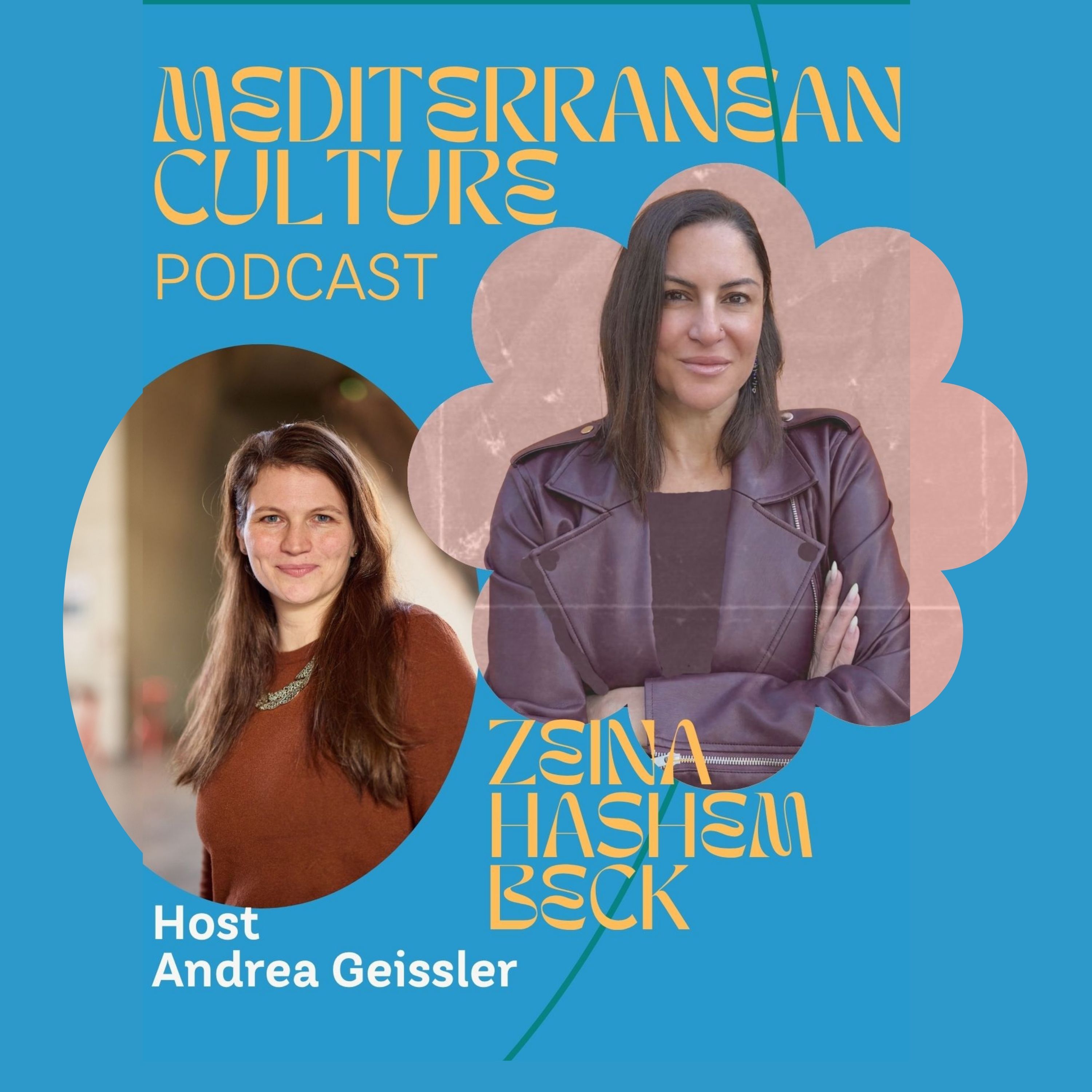
Now, I'm trying to decolonize my brain
Zeina Hashem Beck is a Lebanese poet and writer of longing. These longings are multiple and linked to her biography. She was born and raised in Lebanon, educated at the American University of Beirut. She created a bilingual form called the Duet, in which Arabic and English exist both independently and in conversation with each other. Zeina was awarded several prizes for her poetry collections. Her latest, “O”, won the Arab American Book Award and was named Best Book 2022 by the New York Public Library. After a lifetime in Lebanon and a decade in Dubai, she moved to California with her husband and two daughters. Her fourth poetry collection, This Was Supposed to Be About Beauty, is forthcoming in March 2027. In this episode, we speak about Zeinas multilingual writing and her biography of migrations over several countries. She describes her invisible grief in exile when bad things – like bombings – happen in her homeland. She describes what makes her question her writing in English – “the language of the Empire” and how she is trying to “decolonize” her brain. At the same time she lives in California, where Etel Adnan was writing in Exile before and Zeina senses her traces. Of course, it wasn’t a conversation with Zeina if it wasn’t supposed to be about beauty: With host Andrea Zeina explores Bougainvillea trees and how they root in her life, no matter where she is. They reflect on motherhood and “how friends unscare” us, as Zeina puts it. And how “the Mediterranean leans in on you and is tender” just like this episode is supposed to do…
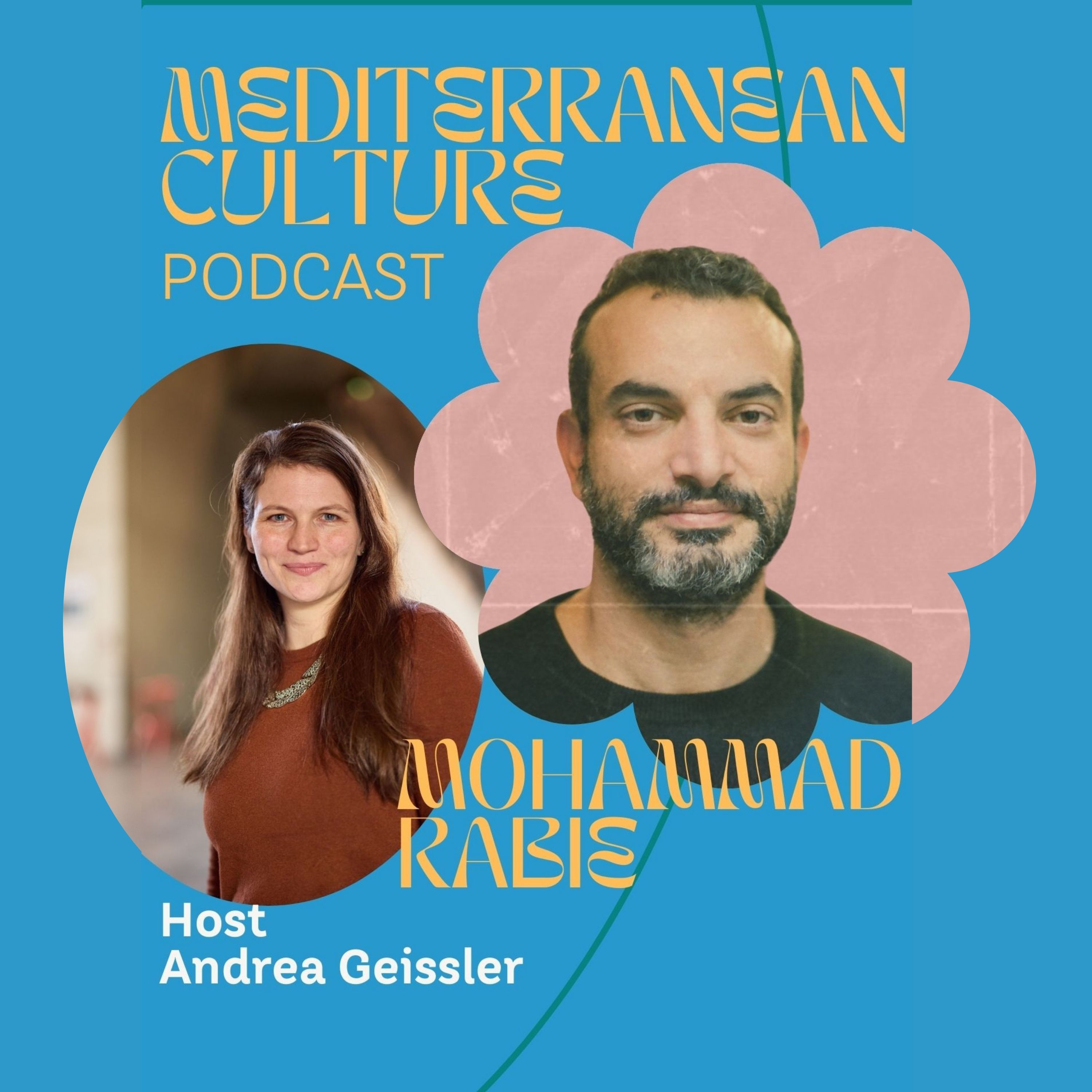
What’s life like after a (failed) revolution?
Mohammad Rabie is an Egyptian author and co-owner of the bookshop Khan Aljanub in Berlin. His latest novel “Otared” (2014) was shortlisted for the International Prize for Arab fiction and is a dystopian vision of Egypt’s future after the failed revolution in 2011. Actually it is set in these days, in the year 2025 – so it is time to review his vision and the actual status quo. In Rabie’s novel, Egypt has been overtaken by a scary Colonial Rule of the “Maltese Knights” and Ahmed Otared, a former police officer joins the resistance and becomes a perfect sniper. “Otared” is brutal and beautiful all at once, a dark and lucid dream, breathtaking and at the same time painful to read. In this episode, we speak about what is painful to speak about: The memory of a failed revolution in Egypt and a lost future for many. “For us, it's just a memory right now. It affects us mentally, psychologically, but we cannot see the effect of what happened in 2011 on the country itself.” Mohammad Rabie gives insights about what it means to write under an authoritarian regime. In his words it becomes tangible how constant self-censorship works. And if you read between the lines, hear all the leftouts and do the math you can sense it in this episode as well. But of course there is and must be life after a revolution – for Mohamed it has taken the shape of his co-owned bookshop in Berlin: “Khan Aljanub”. He tells stories from behind the shelves and we talk about the exclusions of German bureaucracy. And Mohammad Rabie is not afraid to analyze where cultural centers are currently located. Spoiler: It’s not Europe…
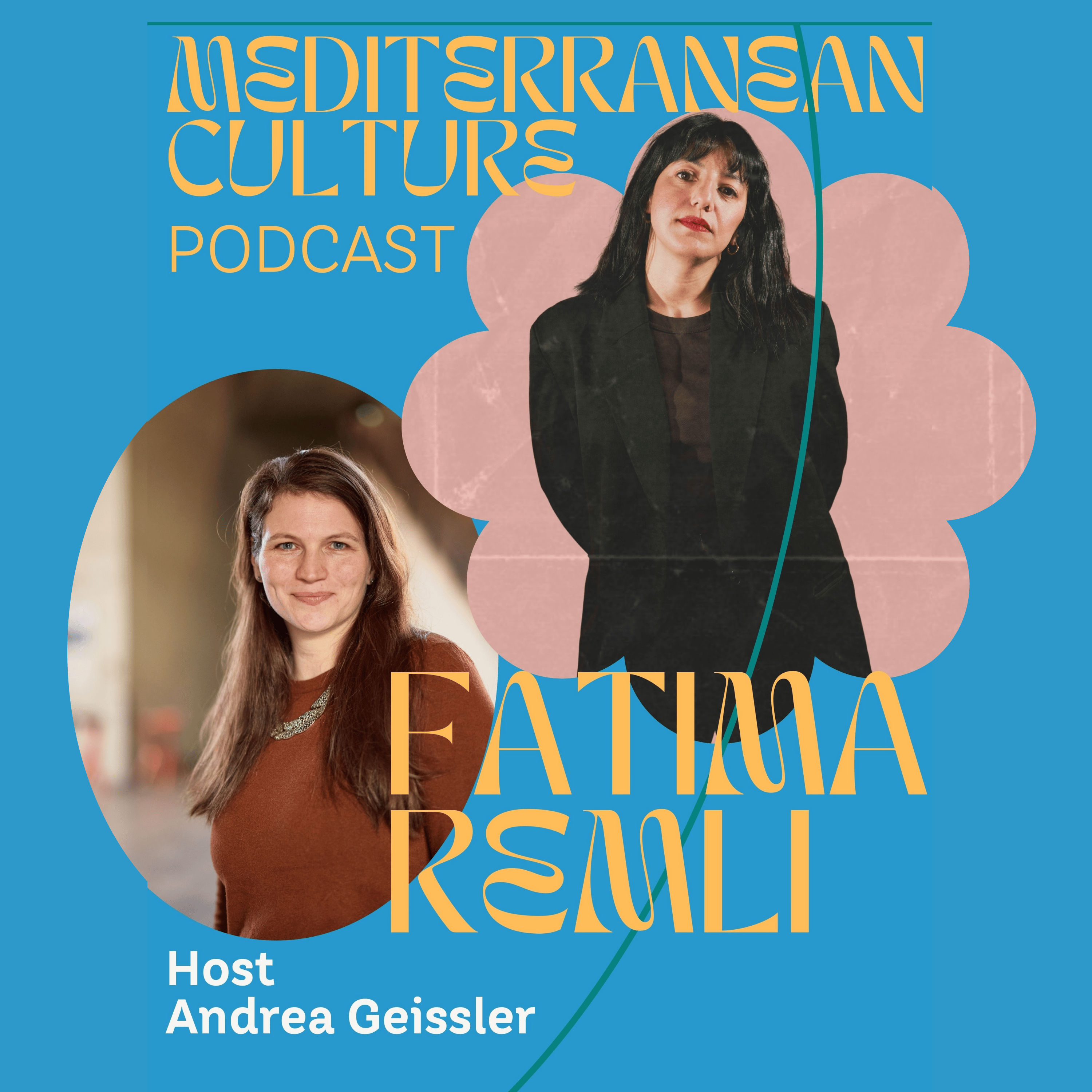
Wie könnte nicht-eurozentrischer Feminismus aussehen?
Mütter, Arbeiterinnen, Migrantinnen. Was haben Frauen zu erzählen, die zu den ersten „Gastarbeiterinnen“ in Deutschland gehörten? Von deren Geschichte(n) so wenige überhaupt etwas wissen? Fatima Remli hat die marokkanischen Frauen in ihrer Umgebung gefragt, die ab 1963 zu den ersten marokkanischen „Gastarbeitern“ gehörten. Daraus ist in Zusammenarbeit mit Ráhel Eckstein-Kovács und Kristina Bublevskaya ein Film entstanden, in dem Schmerz und Zärtlichkeit ganz nah beisammen sind: "Meine Tanten, meine Mutter und diese Frauen, mit denen ich da saß, waren eigentlich die größten Feministinnen – und ich habe es nicht gecheckt, weil ich vom westlichen Blick geprägt bin." - Davon berichtet Fatima Remli in dieser ersten Folge „Mediterranean Culture“, ebenso wie über ihre Erfahrungen als Journalistin bei den jüngsten Gen Z 212-Protesten in Marokko. Doch Fatima Remli ist nicht nur Filmemacherin und Journalistin, sondern auch Autorin und Politische Bildnerin, die bereits viel mit Communities gearbeitet hat. Darum gehen wir von der Dokumentation der Vergangenheit weiter und denken über die Zukunft nach: Wie könnte ein nicht-eurozentrischer Feminismus aussehen?