Want TED Talks on the go? Everyday, this feed brings you our latest talks in audio format. Hear thought-provoking ideas on every subject imaginable – from Artificial Intelligence to Zoology, and everything in between – given by the world's leading thinkers and doers. This collection of talks, given at TED and TEDx conferences around the globe, is also available in video format. Hosted on Acast. See acast.com/privacy for more information.
Alle Folgen
Stress resets, the ultimate mental health hack | Jenny Taitz
Stress is contagious — but so is calm. Psychologist Jenny Taitz explains why one stressful moment tends to snowball into the next, and shares small, immediate resets you can practice anywhere to break the spiral before it starts. Learn more about our flagship conference happening this April at attend.ted.com/podcast Hosted on Acast. See acast.com/privacy for more information.
Sunday Pick: Unsolicited Advice: How to handle layoffs with care | from Fixable
When an organization lays people off , those who remain are often left scrambling to find their footing – and hold other people up – in an environment that no longer feels stable. In the wake of ongoing tech layoffs and the Trump administration’s efforts to reshape the public sector, Anne and Frances are back with a new Unsolicited Advice segment to set the record straight about what layoffs mean for an organization — and the responsibility leaders have to own what went wrong. Learn more about our flagship conference happening this April at attend.ted.com/podcast Hosted on Acast. See acast.com/privacy for more information.
3 things I wish I knew when I was broke | Vivian Tu
Finance doesn't have to feel like a foreign language. Wall Street trader-turned-financial educator Vivian Tu helps millions of people make sense of money, breaking down complex concepts into everyday terms you can understand. She shares how she broke free from the stress of living paycheck to paycheck — and explores how we can shift power structures to give everyone a real shot at building wealth. (Following the talk, Elise Hu, host of TED Talks Daily, interviews Tu on why financial literacy isn’t just about building generational wealth but rather is a way to pass on generational knowledge to your loved ones.) Learn more about our flagship conference happening this April at attend.ted.com/podcast Hosted on Acast. See acast.com/privacy for more information.
Why the world is still not built for women | Virginia Santy
Design consultant Virginia Santy set out to create an office space built specifically for women, flipping the script on the subtle (and not-so-subtle) ways that workplaces and cities still fail them. The results were striking: greater productivity, deeper collaboration and an environment where women felt genuinely valued, leading her to ask a simple question: What would the world look like if we designed with women in mind? Learn more about our flagship conference happening this April at attend.ted.com/podcast Hosted on Acast. See acast.com/privacy for more information.
The magical, mesmerizing migration of monarch butterflies | Jaime Rojo (re-release)
When monarch butterflies migrate, they produce one of the most iconic wildlife spectacles in the world — and provide us with an important indicator of ecological health, says photographer Jaime Rojo. Telling a story about our relationship to the natural world, he shares his experience photographing these mesmerizing insects deep in their remote mountain habitats in Mexico, diving into the latest research into the mysteries of their multi-thousand-mile journey and sharing how each of us can join the growing movement to protect them. This episode originally aired on October 2024. Learn more about our flagship conference happening this April at attend.ted.com/podcast Hosted on Acast. See acast.com/privacy for more information.
My bank called in the middle of my TED Talk | Mike Albo
In this TED Talk gone wrong, comedian Mike Albo receives an unexpected call from his bank. The result: a hilariously uncomfortable tour of his purchase history, and a reminder that in the digital age, our data knows us a little too well. Learn more about our flagship conference happening this April at attend.ted.com/podcast Hosted on Acast. See acast.com/privacy for more information.
3 ways to create a truly original design | Lope Gutierrez-Ruiz
In a world where design trends are quietly converging — same color palettes, same typography, same illustration styles — how do you make work that actually looks different? Designer and TED Fellow Lope Gutierrez-Ruiz distills his answer into three sharp, counterintuitive ideas, ticking through his studio's own funky creations to show how you can make things that stand out. Learn more about our flagship conference happening this April at attend.ted.com/podcast Hosted on Acast. See acast.com/privacy for more information.
Life on the frontlines of war reporting | Jane Ferguson (re-release)
Covering global war stories can be hard and thankless — but it's critical work if the rest of us are to understand what's really going on in the world. For nearly two decades, journalist Jane Ferguson has reported on hostilities across Africa and the Middle East, and she's witnessed firsthand the changing face of her profession. Via stories of her own experiences at the heart of complex conflicts, she shares fascinating details of how she and other female colleagues have changed the way that news is captured, shared — and understood. This episode originally aired in November 2023. Learn more about our flagship conference happening this April at attend.ted.com/podcast Hosted on Acast. See acast.com/privacy for more information.
Sunday Pick: 20th Anniversary celebration with renowned poets Eileen Myles, Elizabeth Alexander, Sarah Kay, and Amber Tamblyn | from Design Matters
For the 20th anniversary of Design Matters, Debbie Millman revisits conversations with renowned poets Eileen Myles, Elizabeth Alexander, Sarah Kay, and Amber Tamblyn. These excerpts reflect on language, identity, memory, and the lived experience that fuels their work. Together, they reveal poetry as an intimate practice that resonates beyond the page. Learn more about our flagship conference happening this April at attend.ted.com/podcast Hosted on Acast. See acast.com/privacy for more information.
How to tune your inner voice | Rhonda Ross, Daniel Alexander Jones
To calm the storm inside your mind, you must first understand it. Singer and actress Rhonda Ross shares her theory of "emotional sovereignty" — the idea that your feelings aren't shaped just by your circumstances, but by the thoughts running on loop in your head. In conversation with scholar and TED Fellow Daniel Alexander Jones, Ross introduces the unexpected, music-rooted practice for taking control of your narrative. Learn more about our flagship conference happening this April at attend.ted.com/podcast Hosted on Acast. See acast.com/privacy for more information.
Joy will find you — if you let it | David Larbi
Author David Larbi recites a poem about the journey toward joy, reminding us of all the ways it can be found: having a conversation with a stranger, tasting the perfect bite of food or enjoying a good stretch. Joy is all around us — you just need to know where to look. Learn more about our flagship conference happening this April at attend.ted.com/podcast Hosted on Acast. See acast.com/privacy for more information.
The 6 eras of NBA fashion — from restrained to radical | Mitchell S. Jackson
What are you wearing, and why? This is the question that writer and TED Fellow Mitchell S. Jackson asks as he unpacks the six eras of NBA style. Tracing an arc from Bill Russell to Lebron James and beyond, he explores how players use fashion on and off the court to challenge the limits placed upon them — revealing a deeper story about culture, identity and power. Learn more about our flagship conference happening this April at attend.ted.com/podcast Hosted on Acast. See acast.com/privacy for more information.
I taught rats to drive. They taught me to enjoy the ride | Kelly Lambert
What can happy rats teach us about human joy? Behavioral neuroscientist Kelly Lambert describes how her team trained rats to drive tiny cars to earn treats — and noticed something surprising about how effort and anticipation affect the brain. The experiment opens new questions about how reward, agency and "behaviorceuticals" might help build resilience and support mental health. Learn more about our flagship conference happening this April at attend.ted.com/podcast Hosted on Acast. See acast.com/privacy for more information.
Is luck random — or can you cultivate it? | Christian Busch
When the 2025 Los Angeles wildfires destroyed his home and neighborhood, scientist Christian Busch encountered the opposite of serendipity: "zemblanity," or bad luck by design. Drawing on more than a decade of scientific research, he explores how people can navigate unpredictability by adopting a serendipity mindset that transforms setbacks into unexpected new beginnings. He asks: What if good luck isn't random but can actually be cultivated? Learn more about our flagship conference happening this April at attend.ted.com/podcast Hosted on Acast. See acast.com/privacy for more information.
How to make transportation quieter, cleaner and cheaper | Doreen Orishaba
When Doreen Orishaba helped build Africa’s first electric car in 2011, skeptics dismissed it as a “toy for the Western world.” Now she’s running dozens of electric buses across Kenya and Rwanda, moving thousands of passengers to work every day on zero-exhaust vehicles powered by near-silent engines. She breaks down what it actually takes to scale clean transport — and why skipping the gas station pit stop is closer than you may think. Learn more about our flagship conference happening this April at attend.ted.com/podcast Hosted on Acast. See acast.com/privacy for more information.
Sunday Pick: Margaret Atwood on what AI can’t replace | from ReThinking with Adam Grant
Margaret Atwood is best known as the author of The Handmaid’s Tale, and she’s won a slew of awards for her novels, poetry collections, and children’s books. Now, at the age of 86, she’s written her first memoir, The Book of Lives. In this episode, Adam and Margaret break down her perspective on what creative jobs AI will and won’t threaten and discuss the evidence on the benefits of reading banned books. They also muse about why heroes need monsters and what it means to be delightfully disagreeable. Learn more about our flagship conference happening this April at attend.ted.com/podcast Hosted on Acast. See acast.com/privacy for more information.
Why you should keep a list of what makes you laugh | Chris Duffy
The world is weird and hilarious — if you know where to look, says comedian Chris Duffy. In conversation with "TED Talks Daily" host Elise Hu, Duffy breaks down three practical pillars of humor, showing how laughter can help you feel present, creative and connected, even when the world feels overwhelming. Learn more about our flagship conference happening this April at attend.ted.com/podcast Hosted on Acast. See acast.com/privacy for more information.
The sneaky language tricks cults use to influence you | Amanda Montell
In the age of social media and wellness trends, the comments section is as good as a cult compound, says linguist and cultural commentator Amanda Montell. Using Taylor Swift’s throng of devoted Swifties as her guide, she exposes three sneaky language tactics that cults use to influence us (for better or for worse), revealing why none of us are as cult-proof as we’d like to think. (Following the talk, Elise Hu, host of TED Talks Daily, interviews Montell on parasocial relationships and how to have productive conversations with cult members by recognizing their humanity.) Learn more about our flagship conference happening this April at attend.ted.com/podcast Hosted on Acast. See acast.com/privacy for more information.
3 habits to practice curiosity — and escape your phone | Nayeema Raza
We're so entangled with our devices that online has started to feel more real than IRL, says journalist Nayeema Raza. As screens reshape how we connect and relate, she offers three practical habits to reignite curiosity, restore presence and break free from our phones. (Following the talk, Elise Hu, host of TED Talks Daily, interviews Raza on the best approach to discussing difficult topics — whether it’s about screen addiction or gun control — and how to get over the fear of asking dumb questions.) Learn more about our flagship conference happening this April at attend.ted.com/podcast Hosted on Acast. See acast.com/privacy for more information.
The award for best comedy wildlife photo goes to... | Tom Sullam
Where's the best free comedy show in town? Tom Sullam, cofounder of the annual Comedy Wildlife Photography Awards, shares hilarious animal photos that dissolve the distance between humans and nature. The result? A joyful case for caring about what we're at risk of losing. Learn more about our flagship conference happening this April at attend.ted.com/podcast Hosted on Acast. See acast.com/privacy for more information.
What would your "deathbed self" tell you today? | Lauren Deeley
What if the key to making better decisions today is getting to know the person you'll become tomorrow? Drawing on psychological research and real-life stories, private wealth advisor Lauren Deeley explores how building a meaningful connection with your "deathbed self" can bring more clarity, joy and intention to the life you're building right now. Learn more about our flagship conference happening this April at attend.ted.com/podcast Hosted on Acast. See acast.com/privacy for more information.
Do you talk to yourself? Here’s how to harness your inner voice | Ethan Kross (re-release)
Your inner voice is a powerful tool for self-reflection and planning, but it can also trap you in negative thought loops — “chatter,” as psychologist and neuroscientist Ethan Kross calls it. He shares tips for quieting the less helpful aspects of the voice inside your head as well as how to harness chatter to overcome doubt, enhance your focus and transform your well-being. This episode was originally published in February 2025. Learn more about our flagship conference happening this April at attend.ted.com/podcast Hosted on Acast. See acast.com/privacy for more information.
Sunday Pick: Interview: Aging, menopause, and rethinking fashion for comfort in midlife with Stacy London | from TED Health
“My lens around style doesn’t have anything to do with style anymore — it’s about physicality,” says stylist and fashion consultant Stacy London. “What do I want to be able to do? How do I keep myself strong?” Stacy’s message has resonated for many women, and for this episode, she joins Dr. Shoshana Ungerleider, host of TED Health, at TED2025 for a special live conversation about why women are so embarrassed to talk about aging. For Stacy, aging became a chance to reassess her relationship to her body, and her experience with menopause and spinal surgery shifted her focus to health and wellbeing. Her best advice on what you can do to feel good in your skin? Throw away the most painful pair of shoes you own. Learn more about our flagship conference happening this April at attend.ted.com/podcast Hosted on Acast. See acast.com/privacy for more information.
Love, intimacy and connection in the age of AI | Bryony Cole
Relationships were never meant to be efficient, says sextech expert Bryony Cole, and yet AI companions are increasingly designed to be exactly that. As intimate relationships between humans and AI become more common, Cole challenges us to think more deliberately about how we shape our connections to machines — and with each other. (This conversation, hosted by TED's Whitney Pennington Rodgers, was part of an exclusive TED Membership event. TED Membership is the best way to support and engage with the big ideas you love from TED. To learn more, visit ted.com/membership.) Learn more about our flagship conference happening this April at attend.ted.com/podcast Hosted on Acast. See acast.com/privacy for more information.
Conservation: a love story | Elsaphan Njora
What if the key to saving nature isn't just about science or policy, but love? Love for the land, for the people who depend on it, for the world we leave behind. Artist Elsaphan Njora has journeyed across Kenya witnessing ecosystems vanish, from Indigenous forests to sacred lakes. But he's also seen communities breathing life back into rivers, forests and coasts in creative, unexpected ways — showing that conservation can flourish alongside livelihoods, and that even the most threatened landscapes can be reborn. Learn more about our flagship conference happening this April at attend.ted.com/podcast Hosted on Acast. See acast.com/privacy for more information.
Fight for justice — even if you don't live to see it | Golriz Lucina (re-release)
Storyteller Golriz Lucina recounts how the historic sacrifice of Iranian 19th-century poet and mystic Táhirih planted the seeds for the "Woman, Life, Freedom" protests today, offering an inspiring lesson in the value of acting with conviction — even if we don't live to see the results. (This talk was originally published on January 2024) Learn more about our flagship conference happening this April at attend.ted.com/podcast Hosted on Acast. See acast.com/privacy for more information.
4 relationship traps that lead to burnout | Eric Quintane
Are your workplace relationships quietly burning you out? Drawing on large-scale research across industries, organizational behavior researcher Eric Quintane reveals four hidden relational traps woven into the fabric of work — and explores how connection shapes resilience, vulnerability and burnout. Learn more about our flagship conference happening this April at attend.ted.com/podcast Hosted on Acast. See acast.com/privacy for more information.
My year living with a robot | Emily Kate Genatowski
Imagine a robot moving into your home. How would it change your daily life? Historian Emily Kate Genatowski shares five eye-opening lessons from a year living with her AI-powered robot roommate, from the quirky and chaotic to the surprisingly mundane. Her experiences show that the future of robots isn’t science fiction — it’s practical, messy and already here. Learn more about our flagship conference happening this April at attend.ted.com/podcast Hosted on Acast. See acast.com/privacy for more information.
The attack on Iran — why now? | Ian Bremmer
On the morning of February 28, 2026, the US and Israel bombed several parts of Iran, including the Tehran compound of Supreme Leader Ali Khamenei. Geopolitical expert and Eurasia Group founder Ian Bremmer breaks down why US President Donald Trump made the decision to strike, what it means for hopes of “regime change” and the key details you need to know about this perilous moment in global history. (This interview, hosted by TED’s Helen Walters, was recorded on February 28, 2026.) Learn more about our flagship conference happening this April at attend.ted.com/podcast Hosted on Acast. See acast.com/privacy for more information.
Sunday Pick: Matt Damon on solving one of the planet’s biggest problems, in partnership with Gary White | from ReThinking with Adam Grant
Matt Damon is best known as the Hollywood icon from movies like Good Will Hunting and The Martian, but he has another passion offscreen: ensuring access to clean, safe water around the world. When he met social entrepreneur Gary White in 2008, they realized they could combine their efforts to reach more people and created water.org, which Gary leads as CEO. In this episode, Adam sits down with Matt and Gary at the World Economic Forum in Davos to talk about their innovative approach to problem-solving, handling rejection in high-stakes work environments, and Matt’s knack for forging strong partnerships. Adam also invites the two to office hours to tackle one of their ongoing challenges. Host & Guest Adam Grant (Instagram: @adamgrant | LinkedIn: @adammgrant | Website: https://adamgrant.net/) Matt Damon (Website: https://water.org/about-us/founders-board-team/matt-damon/) Gary White (Website: https://water.org/about-us/founders-board-team/gary-white/) Learn more about our flagship conference happening this April at attend.ted.com/podcast Hosted on Acast. See acast.com/privacy for more information.
What to do when you’re told there’s nothing left to try | David Fajgenbaum and Kiah Williams
What do you do when the world declares something impossible? When physician-scientist David Fajgenbaum was dying from a rare disease and social entrepreneur Kiah Williams was confronting the realities of economic hardship, they began asking a different question: What can I do today? In this conversation, they discuss how turning hope into action can drive meaningful change — one step at a time. (This conversation is hosted by The Audacious Project’s Alexandra Tillmann) Learn more about our flagship conference happening this April at attend.ted.com/podcast Hosted on Acast. See acast.com/privacy for more information.
The tiny organisms transforming farming | Karsten Temme
What if the solution to feeding humanity has been hiding in the soil for millions of years? Bioengineer Karsten Temme discovered a remarkable answer to this question: for eons, crops relied on soil microbes to convert atmospheric nitrogen into food — until modern farming severed that ancient partnership. He shows how we can reawaken those dormant microbes using gene editing, creating “living fertilizer” that delivers nutrients to crops in real time and transforms farms around the world. Learn more about our flagship conference happening this April at attend.ted.com/podcast Hosted on Acast. See acast.com/privacy for more information.
Jermaine Dupri on the art of making a hit | On the Spot
Legendary music producer Jermaine Dupri pulls back the curtain on how hit songs really get made in TED’s rapid-fire Q&A format, “On the Spot.” Answering a stream of unexpected questions, he covers what makes a good hook, why he doesn’t chase “cool,” how he helped build Atlanta’s sound and more. Learn more about our flagship conference happening this April at attend.ted.com/podcast Hosted on Acast. See acast.com/privacy for more information.
The story you're not hearing about AI data centers | Ayșe Coskun
The race to build smarter AI is crashing into a physical limitation: the power grid simply can't keep up with the energy demands of data centers. Computer scientist Ayșe Coskun shows how we could turn this problem on its head, transforming AI facilities into virtual batteries that help stabilize the grid and accelerate clean energy. Learn why the technology causing this crisis might be the only thing smart enough to fix it. Learn more about our flagship conference happening this April at attend.ted.com/podcast Hosted on Acast. See acast.com/privacy for more information.
The controversial climate tool funding real change | Sandeep Roy Choudhury
If a company plants trees to offset its pollution, is that climate progress — or is it greenwashing? Critics of carbon markets say it’s the latter. But Sandeep Roy Choudhury, who’s spent two decades financing climate projects from rural cookstoves to coastal forests, says the real failure is discouraging companies from even trying. Hear his case for why we shouldn’t let perfection block meaningful action on climate change. Learn more about our flagship conference happening this April at attend.ted.com/podcast Hosted on Acast. See acast.com/privacy for more information.
A surprisingly effective way to fight misinformation | Dave Jorgenson
What if the best defense against misinformation isn’t panic, but a punchline? Journalist and comedian Dave Jorgenson explores how misinformation has proliferated throughout history — from the age of Plato to the era of viral TikToks. With his own short, absurdist sketches that explain the news, he shows how humor can cut through fear, spark curiosity and explore nuanced truth. Learn more about our flagship conference happening this April at attend.ted.com/podcast Hosted on Acast. See acast.com/privacy for more information.
Sunday Pick: The science of raising kids (Part 2): How to raise healthy kids with Dr. Shari Barkin | from TED Health
From negotiating food choices to limiting screen time, raising healthy kids is complicated—but it doesn’t have to be, says pediatrician Dr. Shari Barkin. Dr. Barkin joins Shoshana to talk about the ways caregivers can carve out 10 minutes of their day to model a healthy lifestyle and help everyone in the family thrive. Talk featured: Inside the mind of a newborn baby - Claudia Passos Ferreira Learn more about our flagship conference happening this April at attend.ted.com/podcast Hosted on Acast. See acast.com/privacy for more information.
Why pursuing happiness makes you ... less happy | Emily Esfahani Smith
Drawing on clinical research and psychological studies, writer and psychologist Emily Esfahani Smith shows why pursuing meaning — the experience of connecting to something beyond yourself — creates a deeper sense of well-being than comes from chasing happiness. Learn about the steps you can take to move from feeling stuck to living with intention. Learn more about our flagship conference happening this April at attend.ted.com/podcast Hosted on Acast. See acast.com/privacy for more information.
How to turn off work thoughts during your free time | Guy Winch (re-release)
Feeling burned out? You may be spending too much time ruminating about your job, says psychologist Guy Winch. Learn how to stop worrying about tomorrow’s tasks or stewing over office tensions with three simple techniques aimed at helping you truly relax and recharge after work. This episode originally aired on December 9, 2019. Learn more about our flagship conference happening this April at attend.ted.com/podcast Hosted on Acast. See acast.com/privacy for more information.
How to be a great listener | Maegan Stephens, Nicole Lowenbraun
Have you ever left a meeting thinking: everyone talked, but nothing was achieved? Chances are that people were listening to each other, just not in the same way. Listening experts Maegan Stephens and Nicole Lowenbraun unpack the four different ways to listen, sharing a practical framework that could change how you respond, build trust and get results — starting with just one simple question. Learn more about our flagship conference happening this April at attend.ted.com/podcast Hosted on Acast. See acast.com/privacy for more information.
What you know that AI doesn’t | Priyanka Vergadia
AI is good at seeing patterns, but it’s humans who figure out what to do next, says technologist Priyanka Vergadia. She shares three stories of human excellence sparked by AI insights and offers a pathway to identify and cultivate your irreplaceable qualities, turning the AI revolution from a threat into an opportunity. Learn more about our flagship conference happening this April at attend.ted.com/podcast Hosted on Acast. See acast.com/privacy for more information.
Why I want to bring lions back to my village | Seif Hamisi
As a child in rural Kenya, conservationist Seif Hamisi fell asleep to the sound of lions outside his village. Today, the lions are gone, mirroring a continent-wide trend: African wildlife populations have plummeted in recent decades, despite billions spent to protect nature. Drawing on examples of successful conservation efforts from the grasslands of South Africa to the woodlands of Kenya, he shows how we've been attempting to solve the wrong problem — and makes the case that conservation works best when it makes economic sense. Learn more about our flagship conference happening this April at attend.ted.com/podcast Hosted on Acast. See acast.com/privacy for more information.
The new science of eyewitness memory | John Wixted
We've built a legal system that distrusts eyewitness memory — backed by cautionary science and high-profile exonerations. John Wixted, a leading psychology researcher, challenges this conventional wisdom with a counterintuitive finding: the problem might not be memory itself but how (and when) courts test it. Learn more about our flagship conference happening this April at attend.ted.com/podcast Hosted on Acast. See acast.com/privacy for more information.
Sunday Pick: How to find true love (w/ Francesca Hogi) | from How to Be a Better Human
Love coach Francesca Hogi is dedicated to helping daters find “lasting love in the midst of a broken dating culture.” In this episode, Francesca shares her approach to analyzing romantic patterns and feeling more empowered in your love life. From discussing romantic manifestations to reflecting on bell hooks’ claim that humans are unskilled at love, Chris and Francesca talk about the ways you can be more open to finding love. Learn more about our flagship conference happening this April at attend.ted.com/podcast Hosted on Acast. See acast.com/privacy for more information.
The AI-generated intimacy crisis | Bryony Cole
Tonight, millions of people will go to bed and whisper to an AI companion. But what are we giving up when we fall in love with machines? Sextech expert Bryony Cole offers three questions to ask yourself if you’re already intimate with AI, laying out a playbook for synthetic companionship that doesn’t hide you from the messiness of human life — but prepares you for it instead. Learn more about our flagship conference happening this April at attend.ted.com/podcast Hosted on Acast. See acast.com/privacy for more information.
The doctor on a mission to build a healthier South Sudan | Yohanis Riek
Yohanis Riek went from herding cattle and fighting as a child soldier to becoming the first doctor in his community in South Sudan. He shares his journey to found a nonprofit bringing health care to remote communities — empowering locals to take charge of their own health, as the world's newest country finds its place in the world. (Following the talk, Lily James Olds, director of the TED Fellows program, interviews Riek on the effect of USAID withdrawal in South Sudan and why he’s choosing to stay in his home country to better serve local populations.) Learn more about our flagship conference happening this April at attend.ted.com/podcast Hosted on Acast. See acast.com/privacy for more information.
The pressure that makes Olympians perform worse | Dominique Condo
Why do we celebrate appearance over ability in sports? Performance scientist Dominique Condo explores why so many elite female athletes — women with Olympic medals, world records and championship trophies — report body image concerns that end up hindering their performance. She offers a series of subtle shifts we can make to help any athlete stay focused on building strength, resilience and confidence. Learn more about our flagship conference happening this April at attend.ted.com/podcast Hosted on Acast. See acast.com/privacy for more information.
How competition is stifling AI breakthroughs | Llion Jones
Llion Jones cowrote "Attention Is All You Need," the seminal paper that introduced the transformer — the architecture that launched the generative AI revolution. Now he warns that the industry that grew out of this breakthrough is stifling the next one. Learn why the current corporate arms race is killing true innovation and how we can get back to bold exploration. Learn more about our flagship conference happening this April at attend.ted.com/podcast Hosted on Acast. See acast.com/privacy for more information.
The 6 essential ingredients of loving relationships | Sara Nasserzadeh
How do you build a lifetime of love? After analyzing 450 couples across more than 40 countries, relational psychotherapist Sara Nasserzadeh discovered six essential ingredients for successful relationships (hint: it's not just about sexual chemistry). Learn more about "emergent love" — a new, evidence-based model for fostering the love you desire. Learn more about our flagship conference happening this April at attend.ted.com/podcast Hosted on Acast. See acast.com/privacy for more information.
The brilliance of bridges and roads that repair themselves | Mark Miodownik
Your skin heals after a scratch. What if our roads, bridges and cities could self-repair after getting damaged, too? Scientist and engineer Mark Miodownik describes a new class of materials — animate matter — with the potential to sense damage, self-heal and even biodegrade when the job is done. Humanity's next great leap isn't making more stuff, he says — it's making stuff that doesn't fall apart. Learn more about our flagship conference happening this April at attend.ted.com/podcast Hosted on Acast. See acast.com/privacy for more information.
Sunday Pick: The Truth About "The Zone" (with Steph Curry) | Good Sport
When it comes to sports, is there anything more evocative -- and elusive -- than "the zone"? That mythical place an athlete goes to where focus is laser-sharp, nothing can go wrong and time just vanishes. In this episode of Good Sport, a podcast from the TED Audio Collective, host Jody Avirgan talks to NBA All-Star great Steph Curry about what "the zone" means for him -- and whether or not it even exists. Then Jody works on his mental game with sports psychologist Dr. Nicole Detling and follows Olympic biathlete Clare Egan in a step-by-step guide on how to foster mental resilience after failure. Learn more about our flagship conference happening this April at attend.ted.com/podcast Hosted on Acast. See acast.com/privacy for more information.
A songwriting battle with my AI clone | Jason "Poo Bear" Boyd, Elise Hu
As AI tools get better at making music, will there be a time when machines move people more than musicians? Putting that question to the test, legendary hitmaker Jason "Poo Bear" Boyd joins journalist Elise Hu to discuss how new tech is changing the music industry — followed by a live performance where he battles his digital twin to see who can write a catchier song. (Poo Bear is joined onstage by musician Sasha Sirota.) Learn more about our flagship conference happening this April at attend.ted.com/podcast Hosted on Acast. See acast.com/privacy for more information.
A different way to measure success in health care | Andrew Bastawrous
After building a smartphone app to bring eye care to millions of people in remote areas, eye surgeon and TED Fellow Andrew Bastawrous confronted a new question: What do we lose when health care chases speed and efficiency? He offers a quiet provocation for how to get better outcomes for patients and health care workers alike. (Following the talk, Lily James Olds, director of the TED Fellows program, interviews Bastawrous on how his company, Peek Vision, is rethinking access to eye care. The surprising solution isn’t AI or optimization, but addressing the human behaviors that make patients feel more seen — starting with how doctors can be more compassionate.) Learn more about our flagship conference happening this April at attend.ted.com/podcast Hosted on Acast. See acast.com/privacy for more information.
Will AI take your job in the next 10 years? Wrong question | Vinciane Beauchene
As AI agents take over more tasks at work, the question isn’t whether or not humans matter — it’s how we make our impact count. Leadership expert Vinciane Beauchene challenges some commonly held assumptions about how AI will transform the workplace, sharing a blueprint for leaders to design organizations where people can focus on what truly makes a difference. Learn more about our flagship conference happening this April at attend.ted.com/podcast Hosted on Acast. See acast.com/privacy for more information.
What ancestral intelligence can teach us about AI | Nanjira Sambuli
There's a common African proverb: "When elephants fight, it's the grass that suffers." Policy researcher Nanjira Sambuli says we must apply this thinking to today's AI evolution, asking: When tech giants battle for dominance, who gets trampled in the process? She introduces a new ethical compass for AI, showing how people across the continent are charting a different path for the future of tech. Learn more about our flagship conference happening this April at attend.ted.com/podcast Hosted on Acast. See acast.com/privacy for more information.
1 thing you can do today to be happier | Sonja Lyubomirsky
Can anyone become happier? Psychologist Sonja Lyubomirsky studies this question in her lab, doing experiments on "happiness interventions" to see what kinds of actions elicit this sought-after emotion. In a quick talk, she shares the results of her work: a small shift that can change your relationships and put you on the path to happiness. Following the talk, Elise Hu, host of TED Talks Daily, interviews Lyubomirsky on additional changes people can do to feel more connected with each other in an increasingly online and chaotic world. Learn more about our flagship conference happening this April at attend.ted.com/podcast Hosted on Acast. See acast.com/privacy for more information.
In defense of hip-hop | Roland Fryer
Hip-hop often gets blamed for its controversial lyrics. What if there was a way to actually measure its impact on people's lives? Analyzing 40 years' worth of radio station data and lyrics from rappers like Tupac, Dr. Dre, Jay-Z and Kendrick Lamar, economist Roland Fryer puts one of culture's most notorious debates on trial. Learn more about our flagship conference happening this April at attend.ted.com/podcast Hosted on Acast. See acast.com/privacy for more information.
Sunday Pick: How to think critically about history — and why it matters (w/ David Ikard)
Have you ever recalled a story only to have someone point out "that's not how it went"? Well, what happens when what we misrepresent are our historical narratives? David Ikard is a Professor of African American and Diaspora Studies at Vanderbilt University. In this episode, he talks about the societal and personal dangers of inaccurate history knowledge, and uncovers the real story of one of history’s most iconic figures. For the full text transcript, visit go.ted.com/BHTranscripts Learn more about our flagship conference happening this April at attend.ted.com/podcast Hosted on Acast. See acast.com/privacy for more information.
The language you're fluent in — but forgot how to hear | Louis VI
What if the calm you feel when you hear birdsong isn't a coincidence, but ancient evolutionary wiring ... a signal that once meant safety? Musical ecologist and rapper Louis VI says humans are hardwired to nature's sonic language, but modern life has drowned it out. He explores how we can tap back into the "overwhelming chorus of aliveness" we’ve stopped hearing — and performs an original song incorporating rainforest recordings from the Amazon and the Caribbean. Learn more about our flagship conference happening this April at attend.ted.com/podcast Hosted on Acast. See acast.com/privacy for more information.
Why can't we better prepare for extreme weather? | Catherine Nakalembe
Thanks to advanced technology, we can now see droughts and crop failures months before they hit. So why are millions of people still going hungry? TED Fellow Catherine Nakalembe, director of the NASA Harvest program in Africa, exposes the blind spots that keep life-saving climate intelligence from reaching the communities it's designed to protect — and shares how to turn early warning into early action. Learn more about our flagship conference happening this April at attend.ted.com/podcast Hosted on Acast. See acast.com/privacy for more information.
How to become a K-pop superstar — in 7 minutes | Charlene Kaye
Want to become a K-pop superstar? Comedian and musician Charlene Kaye lays out the formula for breaking through in just a few easy steps, from rapping like a sexy baby to dancing like you’re making pizza in the Matrix. Part musical, part dance performance, part comedy show — this is your how-to guide for creating the next K-pop hit. Learn more about our flagship conference happening this April at attend.ted.com/podcast Hosted on Acast. See acast.com/privacy for more information.
What happened when I started scoring my life every day | Chris Musser
Can you measure a "good life?" Management consultant Chris Musser set out to answer this question for himself, developing a daily tracker to monitor progress across nine dimensions, from faith and relationships to work and wellbeing. Learn how it helped him focus on what really matters — and how you can adopt this 90-second habit, too. Learn more about our flagship conference happening this April at attend.ted.com/podcast Hosted on Acast. See acast.com/privacy for more information.
The purity test that's killing clean energy | Riddhima Yadav
Why is it taking so long to finance the climate transition? After years working with the world's largest wealth funds and banks, finance innovator Riddhima Yadav has seen the same pattern: the climate movement is seeking perfection over progress, and starving the very industries that need to transition most. Discover why working with emerging markets and heavy polluters might be the uncomfortable solution to powering a clean future. Learn more about our flagship conference happening this April at attend.ted.com/podcast Hosted on Acast. See acast.com/privacy for more information.
Are you spending your money wisely? | Wolfgang Schnellbaecher
Drawing on his experience negotiating million-dollar deals for global brands, procurement expert Wolfgang Schnellbaecher distills the tricks of the world's best buyers into three simple rules to help you make the most of your money. Learn more about our flagship conference happening this April at attend.ted.com/podcast Hosted on Acast. See acast.com/privacy for more information.
Sunday Pick: Unsolicited Advice: How to get your mojo back at work | Fixable
Are you feeling overwhelmed, uninspired, or burned out at work? In this special Unsolicited Advice episode, Anne and Frances are getting ready for summer by tackling the importance of rest and the power of intention. They offer unexpected tips and tricks for recovering from constant stress, owning what you need to feel alive and engaged, and creating an experience of work that unleashes your ambition. Follow Hosts: Anne Morriss (@annemorriss | LinkedIn: @anne-morriss), Frances Frei (@francesxfrei | LinkedIn: @francesfrei) Links https://anneandfrances.com/ Subscribe to TED Instagram: @ted YouTube: @TED TikTok: @tedtoks LinkedIn: @ted-conferences Website: ted.com Podcasts: ted.com/podcasts Learn more about our flagship conference happening this April at attend.ted.com/podcast Hosted on Acast. See acast.com/privacy for more information.
How to power the world 24/7 — without oil | Cindy Taff
Deep beneath the Earth sits 50,000 times more energy than all the world's fossil fuel reserves, but accessing it requires using the same controversial technology that oil companies spent trillions to develop: fracking. Cindy Taff left Shell to prove that drilling for geothermal heat instead of hydrocarbons can deliver what solar, wind and fossil fuels can't — clean, renewable power at all times, regardless of weather. Could this be the breakthrough that finally solves our energy challenges? Learn more about our flagship conference happening this April at attend.ted.com/podcast Hosted on Acast. See acast.com/privacy for more information.
What I learned from cooking my way across a continent | Dieuveil Malonga
Chef and TED Fellow Dieuveil Malonga traveled to nearly every country in Africa, tasting flavors straight from farms and local kitchens, to learn about the traditions that transform a dish. Today, he runs a center to train the next generation of top chefs from across the continent, collaboratively crafting food that shares each country’s culinary secrets with the world. Following the talk, Lily James Olds, director of the TED Fellows program, interviews Malonga on Chefs Exchange, a program welcoming chefs around the world to share and innovate new methods of cooking. Learn more about our flagship conference happening this April at attend.ted.com/podcast Hosted on Acast. See acast.com/privacy for more information.
How I found resilience as my life fell apart | Jane Marie Chen
Entrepreneur and TED Fellow Jane Marie Chen started a company that created a low-cost portable incubator for premature babies in underserved communities, with the goal of saving more than one million babies around the world. But when a major setback at the company led to burnout, she had to make a choice. In this powerful talk, she shares what happened next — and how it taught her the secret to resilience. Learn more about our flagship conference happening this April at attend.ted.com/podcast Hosted on Acast. See acast.com/privacy for more information.
How to raise kids who can handle hard things | Kathryn Hecht
Could exposing kids to their fears help them thrive later on in life? Exploring the science of exposure therapy, pediatric psychologist Kathryn Hecht shows how encouraging children to handle discomfort builds confidence and resilience. Through personal stories and practical strategies, she shares the secret for raising kids ready to meet life’s challenges. Learn more about our flagship conference happening this April at attend.ted.com/podcast Hosted on Acast. See acast.com/privacy for more information.
3 possible futures for AI — which will we choose? | Alvin W. Graylin, Manoush Zomorodi
After decades working in technology across both the US and China, Alvin W. Graylin sees three possible paths for the future of AI: one where tech giants create a class of trillionaires, one where competition escalates into war or one where humanity builds and shares this technology for the common good. In conversation with TED Radio Hour host Manoush Zomorodi, Graylin cuts through the hype to clarify how we choose the right path. Learn more about our flagship conference happening this April at attend.ted.com/podcast Hosted on Acast. See acast.com/privacy for more information.
The missing piece in climate action (it's not what you think) | Yi Li
When entrepreneur Yi Li cofounded Farmworks, she set out to build 1,000 climate-smart farms across Kenya, complete with dams, irrigation and organic fertilizers. The science was sound, but reality proved more complicated. Learn what she discovered about the missing ingredient behind failed climate solutions — and how it challenges a core assumption of the environmental movement on how to create lasting impact. Learn more about our flagship conference happening this April at attend.ted.com/podcast Hosted on Acast. See acast.com/privacy for more information.
Sunday Pick: Interview: What happens to your brain without any social contact? with Dr. Vivek Murthy
In this episode, TED Health host Dr. Shoshana Ungerleider invites Dr. Vivek Murthy, the 19th and 21st Surgeon General of the United States, to discuss the ongoing loneliness epidemic. After the interview, Shoshana shares a TED-Ed talk from Terry Kupers, "What happens to your brain without social contact?" Everyone needs time to themselves, and peaceful solitude has stress-relieving benefits. But when being alone is forced upon you, the effects can be surprisingly extensive. And though different people experience distinct effects, symptoms tend to become more severe and persistent the longer they're isolated. So, how exactly does isolation affect your body and brain? Terry Kupers investigates. [Directed by Camille Bovey, narrated by Addison Anderson, music by Stephen LaRosa]. Learn more about our flagship conference happening this April at attend.ted.com/podcast Hosted on Acast. See acast.com/privacy for more information.
The art (and science) of stop-motion animation | Brian McLean
You’re invited into the world of stop-motion animation, where design and engineering collide to create fan-favorite films. Visual effects artist Brian McLean (from the Oscar-winning studio behind “Coraline” and “ParaNorman”) explores how 3D printing is revolutionizing this century-old craft, showing how creative obsession paired with cutting-edge technology can reinvent the way we make things. Learn more about our flagship conference happening this April at attend.ted.com/podcast Hosted on Acast. See acast.com/privacy for more information.
The brilliance of bacteria (and how they combat waste) | Patricia Aymà Maldonado
Bacteria are the most incredible creatures on Earth, says biotechnologist and TED Fellow Patricia Aymà Maldonado. She presents a groundbreaking technology that “trains” bacteria to transform organic waste into biodegradable plastic that behaves like the real thing. Learn how this creative, sustainable approach could revolutionize the plastics industry. Following the talk, Lily James Olds, director of the TED Fellows program, interviews Maldonado on what it's like to make 100% biodegradable plastic at the tech company she co-founded, VEnvirotech, why the current recycling system actually increases plastic use, what other biotechnology companies can do to quickly scale for sustainability, and more. Learn more about our flagship conference happening this April at attend.ted.com/podcast Hosted on Acast. See acast.com/privacy for more information.
Would you take a pill that made you love everyone? | Meghan Sullivan
What if the secret to a good life isn't just what you achieve but how deeply you love? Drawing on wisdom from Aristotle, Jesus and modern social psychology, philosopher Meghan Sullivan offers tips on how to expand your capacity for love, even in the face of our modern challenges. Learn more about our flagship conference happening this April at attend.ted.com/podcast Hosted on Acast. See acast.com/privacy for more information.
Let's build AI data centers in space | Philip Johnston
AI is setting up residence in the final frontier, says technologist Philip Johnston. He shares the incredible work being undertaken to build data centers in outer space — and how they might harness both solar power and frigid temperatures in order to address the AI energy challenge. Learn more about the affordability of this wild idea and how it could address concerns about the resources needed to keep up with the AI boom. Learn more about our flagship conference happening this April at attend.ted.com/podcast Hosted on Acast. See acast.com/privacy for more information.
Can you picture things in your mind? I can't | Alex Rosenthal
Picture this: a rocket ship crash-lands on a planet, and an alien approaches the spacecraft. What do you see in your mind when you visualize this scene? For Alex Rosenthal (and many others), the answer is: absolutely nothing. Exploring the fascinating science of aphantasia, or the inability to generate mental images, he shows why our minds are much more different than we think. Learn more about our flagship conference happening this April at attend.ted.com/podcast Hosted on Acast. See acast.com/privacy for more information.
What gets lost when we treat conversations like transactions | Khaya Dlanga
The most powerful stories are the ones told simply to connect with each other, says author Khaya Dlanga. Through humorous anecdotes and moving memories, he explores why it's the conversations we have without strategy or agenda that actually allow us to see one another. Learn more about our flagship conference happening this April at attend.ted.com/podcast Hosted on Acast. See acast.com/privacy for more information.
Sunday Pick: Why your brain is an unreliable narrator (w/ Aparna Nancherla) | How to Be a Better Human
Impostor syndrome is one of many therapy-speak words that have gone mainstream in the past few years — but what is it, really? Aparna Nancherla knows all about it. Aparna is a comedian and the author of Unreliable Narrator: Me, Myself, and Impostor Syndrome. Despite her success as a performer, she isn’t immune to self-doubt. In this episode, she talks about the ways she’s learned to deal with impostor syndrome: like creating a resume listing all her failures, or making up words at parties to gauge other people’s reactions. She also shares how she learned to put less stock in success and what to do when your mind isn’t telling you the truth. For the full text transcript, visit go.ted.com/BHTranscripts Learn more about our flagship conference happening this April at attend.ted.com/podcast Hosted on Acast. See acast.com/privacy for more information.
Silence, the universal medicine | Pico Iyer
In a world growing louder, faster and more fractured, author Pico Iyer makes the case for a radical act of repair. Explore why tapping into silence may be the best medicine you can give yourself, and everyone around you. Learn more about our flagship conference happening this April at attend.ted.com/podcast Hosted on Acast. See acast.com/privacy for more information.
Beyond the Talk: Pico Iyer on silence and stillness
“Humans were never designed to live at a pace determined by machines,“ says author Pico Iyer. Following his talk at TED2025, he joins Elise Hu, host of TED Talks Daily, to share how he finds time for silence and mindfulness in a hyperactive world, why he avoids going online and how his previous TED Talk about ping pong led to him being cast in the film “Marty Supreme.” Learn more about our flagship conference happening this April at attend.ted.com/podcast Hosted on Acast. See acast.com/privacy for more information.
Why I spend hours sketching in conflict zones | George Butler
Illustrator and TED Fellow George Butler reports on the ground from conflict zones, climate hotspots and humanitarian crises, using pen, ink and watercolors to highlight personal stories of perseverance. By slowing down and going deeper than the headlines, his humanistic approach is shifting how we think about the news. Following the talk, Lily James Olds, director of the TED Fellows program, interviews Butler on why slow observation through drawing builds trust in of age of rapid AI-generated images. Learn more about our flagship conference happening this April at attend.ted.com/podcast Hosted on Acast. See acast.com/privacy for more information.
Is inviting everyone to the meeting holding back global cooperation? | Qahir Dhanani
International collaboration expert Qahir Dhanani makes the case for rebuilding public trust in broken institutions by embracing small, focused coalitions that can move faster and act bolder — offering a hopeful, practical vision for updating diplomacy to meet the world’s toughest challenges. Learn more about our flagship conference happening this April at attend.ted.com/podcast Hosted on Acast. See acast.com/privacy for more information.
How to introduce yourself — and get hired | Rebecca Okamoto
First impressions matter, so how do you make yours count? Communication consultant Rebecca Okamoto outlines five simple ways to introduce yourself in 20 words or fewer, setting up any interview or conversation for those three crucial words: "Tell me more." Learn more about our flagship conference happening this April at attend.ted.com/podcast Hosted on Acast. See acast.com/privacy for more information.
The biggest global risks for 2026 | Ian Bremmer
2026 is a tipping point year, says Ian Bremmer, founder of Eurasia Group. Highlighting the top risks that await the world, he breaks down the US military extraction of Venezuela leader Nicolás Maduro and explains why US President Donald Trump’s embrace of the “Donroe doctrine” kicks off the most uncertain geopolitical environment in decades. With stark insights on what’s to come in Europe, Russia and China, this is a can’t-miss look at the volatile world order. (This interview, hosted by TED’s Helen Walters, was recorded on January 5, 2026.) Learn more about our flagship conference happening this April at attend.ted.com/podcast Hosted on Acast. See acast.com/privacy for more information.
Sitting all day is killing you — here's what to do about it | Manoush Zomorodi
You've heard that too much time online is bad for your mental health, but what is it doing to your body? In this energizing talk, journalist and author Manoush Zomorodi explains how tech habits (including sitting all day) affect your physical health, from making you feel exhausted to raising rates of chronic illness. With early results from a 20,000-person experiment, she shares a practical solution to go from "wired and tired" to feeling healthier and more productive. Learn more about our flagship conference happening this April at attend.ted.com/podcast Hosted on Acast. See acast.com/privacy for more information.
Sunday Pick: Building atomic habits with James Clear | from ReThinking with Adam Grant
As a blogger and executive coach, James Clear spent years studying how to form and change habits. His research culminated in the book "Atomic Habits”, which has sold more than 15 million copies and been translated into over 50 languages. James speaks with Adam about changing our systems for achieving goals, building habits around identities as well as actions, and accumulating small wins that add up to big change. Transcripts for ReThinking are available at go.ted.com/RWAGscripts Learn more about our flagship conference happening this April at attend.ted.com/podcast Hosted on Acast. See acast.com/privacy for more information.
Interview: What happens in your brain when you pay attention? with Dr. Sasha Hamdani | from TED Health
Attention isn't just about what we focus on -- it's also about what our brains filter out. By investigating patterns in the brain as people try to focus, computational neuroscientist Mehdi Ordikhani-Seyedlar hopes to build computer models that can be used to treat ADHD and help those who have lost the ability to communicate. Hear more about this exciting science in this brief, fascinating talk. After the talk, Shoshana speaks with psychiatrist and ADHD specialist Dr. Sasha Hamdani on transforming healthcare for patients and families with ADHD. Learn more about our flagship conference happening this April at attend.ted.com/podcast Hosted on Acast. See acast.com/privacy for more information.
How to live a meaningful life | Brian S. Lowery (re-release)
What makes for a meaningful life? Social psychologist Brian S. Lowery explores three ideas tied to the experience of meaning and shows why simply pursuing personal achievements isn't the best way to find it. Learn more about our flagship conference happening this April at attend.ted.com/podcast Hosted on Acast. See acast.com/privacy for more information.
A 3-step guide to believing in yourself | Sheryl Lee Ralph (re-release)
Sheryl Lee Ralph is a force, delivering iconic performances both on stage and screen. But she didn't always know if she'd make it big. In a lively talk sparkling with actionable advice, she shares how her struggles taught her what it takes to believe in herself -- and how we can all find the self-confidence to keep moving forward. Learn more about our flagship conference happening this April at attend.ted.com/podcast Hosted on Acast. See acast.com/privacy for more information.
An ode to living on Earth | Oliver Jeffers (re-release)
If you had to explain to a newborn -- or an alien -- what it means to be a human being living on Earth in the 21st century, what would you say? Visual artist Oliver Jeffers put his answer in a letter to his son, sharing pearls of wisdom on existence and the diversity of life. He shares observations of the "beautiful, fragile drama of human civilization" in this poetic talk paired with his original illustrations and animations. Learn more about our flagship conference happening this April at attend.ted.com/podcast Hosted on Acast. See acast.com/privacy for more information.
How to prepare yourself for 2026 (with 3 lessons from TED-Ed)
The end of the year is a time to reflect and think ahead. What hopes did you have for 2025, and what might be different for 2026? In this special episode, learn from three TED-Ed lessons on how to overcome your mistakes, make smarter decisions and get motivated even when you don’t feel like it. Learn more about our flagship conference happening this April at attend.ted.com/podcast Hosted on Acast. See acast.com/privacy for more information.
How art transforms brokenness into beauty | Lily Yeh (re-release)
Lily Yeh calls herself a barefoot artist: she travels the world with a suitcase full of art supplies, working with whoever wants to join her. In an inspiring talk, she shares the fruits of her collaborative art projects that bring color, community and beauty to public spaces often seen as “broken." Learn more about our flagship conference happening this April at attend.ted.com/podcast Hosted on Acast. See acast.com/privacy for more information.
Sunday Pick: 2025 Staff Picks - Best of How to Be a Better Human
Remember those fun high school superlatives like the “Class Clown” or the “Biggest Flirt”? In this special How to Be a Better Human season finale, you will be hearing from our previous guest Dallas Youth Poet Laureate Naisha Randhar and our team of editors, marketers, producers, fact-checkers and more on their favorite episodes this year. How to Be a Better Human 2025 Superlatives Most Likely to Make You Rethink Your Place in the WorldMost Inspiring StoryMost Likely to Make You Feel Your FeelsBest Motivator Most Likely to Improve Your Life TomorrowBiggest Perspective ShifterMost Shared TidbitLearn more about our flagship conference happening this April at attend.ted.com/podcast Hosted on Acast. See acast.com/privacy for more information.
4 kinds of regret -- and what they teach you about yourself | Daniel H. Pink (re-release)
Regret is one of our most powerful emotions -- and also one of the most misunderstood. Over the past two years, author Daniel H. Pink has collected a trove of more than 16,000 regrets from people in 105 countries in an effort to better understand this mysterious emotion. He shares the key patterns that emerged (it all boils down to the same four core regrets, he says) and explains how to transform your own regrets in order to create the life you've always wanted to live. (This talk and conversation, hosted by TED current affairs curator Whitney Pennington Rodgers, was part of an exclusive TED Membership event. Visit ted.com/membership to become a TED Member.) Learn more about our flagship conference happening this April at attend.ted.com/podcast Hosted on Acast. See acast.com/privacy for more information.
Why your life needs novelty, no matter your age | Kenneth Chabert (re-release)
To truly savor life, pursue "powerful first experiences," says storyteller and nonprofit founder Kenneth Chabert. Learn more about how to create these meaningful moments, where mundane routine is broken by novel experiences in small but significant ways -- no matter how old you are. Learn more about our flagship conference happening this April at attend.ted.com/podcast Hosted on Acast. See acast.com/privacy for more information.
The spiritual wisdom we need for a planet in crisis | Tariq Al-Olaimy
As cascading climate challenges reshape our world, the most resilient systems are ones we often overlook. Ecological futurist Tariq Al-Olaimy has seen this firsthand in disaster-stricken communities, where church basements, mosque yards and temple networks form a "spiritual infrastructure" that sustains people long before formal aid arrives. Drawing on a decade of work with global faith coalitions, Al-Olaimy explores why spiritual traditions are uniquely equipped to navigate moments of collapse — and how aligning our inner values, economies and ecosystems may be essential to restoring life on a changing planet. Learn more about our flagship conference happening this April at attend.ted.com/podcast Hosted on Acast. See acast.com/privacy for more information.
What successful negotiators do differently | Kathryn Valentine
Studies show that women negotiate just as frequently as men — so why do they succeed half as often? With wit and humor, business consultant Kathryn Valentine unpacks the gender expectations of workplace negotiations, offering a clear equation for anyone to make a successful ask and get what they want. Learn more about our flagship conference happening this April at attend.ted.com/podcast Hosted on Acast. See acast.com/privacy for more information.
AI's next frontier isn't where you might expect | Hardy Pemhiwa
With a billion mobile phone users and a median population age of 19, Africa isn't catching up to the AI revolution — it's writing an entirely different playbook, says business leader Hardy Pemhiwa. He shows how a generation of entrepreneurs is using AI to teach classes, triage patients and boost farm yields through the power of local compute, local data and local languages. Learn more about our flagship conference happening this April at attend.ted.com/podcast Hosted on Acast. See acast.com/privacy for more information.
This is how kids should be learning with AI | Priya Lakhani
As AI races into classrooms, we risk confusing quick and easy answers with true learning, says AI education entrepreneur Priya Lakhani. She explains why being challenged is essential for making knowledge stick — and how AI can be designed to strengthen (not weaken) learning, teaching and thinking. Learn more about our flagship conference happening this April at attend.ted.com/podcast Hosted on Acast. See acast.com/privacy for more information.
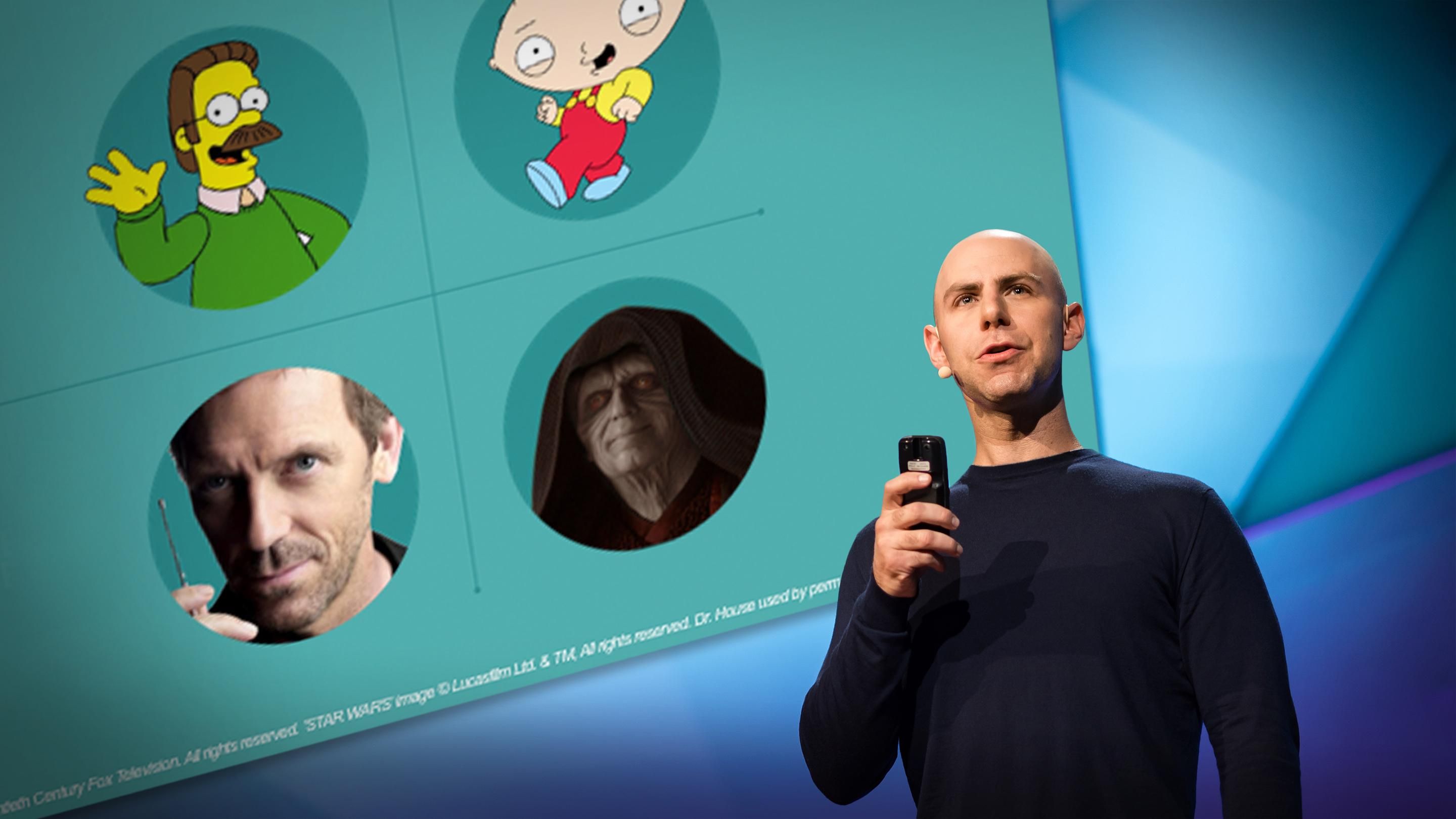
Are you a giver or a taker? | Adam Grant
In every workplace, there are three basic kinds of people: givers, takers and matchers. Organizational psychologist Adam Grant breaks down these personalities and offers simple strategies to promote a culture of generosity and keep self-serving employees from taking more than their share. Learn more about our flagship conference happening this April at attend.ted.com/podcast Hosted on Acast. See acast.com/privacy for more information.