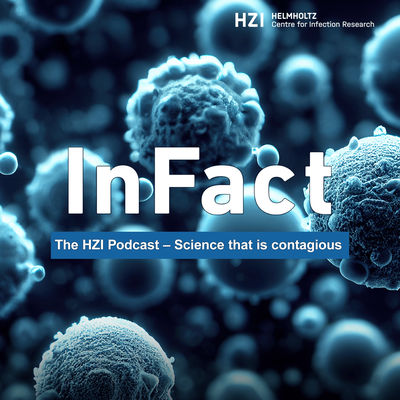
At first glance, biology and computer science seem like opposites. In reality, however, computer science is something like a highly organized manager for modern biology: wherever enormous amounts of data are generated from research, progress is hardly possible without digital methods. Bioinformatician Prof. Andreas Keller therefore relies on artificial intelligence. He heads the Clinical Bioinformatics research group at the Helmholtz Institute for Pharmaceutical Research Saarland, or HIPS for short – an institute founded in 2009 by the Helmholtz Centre for Infection Research and Saarland University. In this episode of InFact, host Julia Demann talks to him about how AI can help us understand how beneficial and harmful bacteria communicate with each other in our bodies, how to predict when infections will cause long-term effects, and how this can be used to develop new drugs against dangerous pathogens.